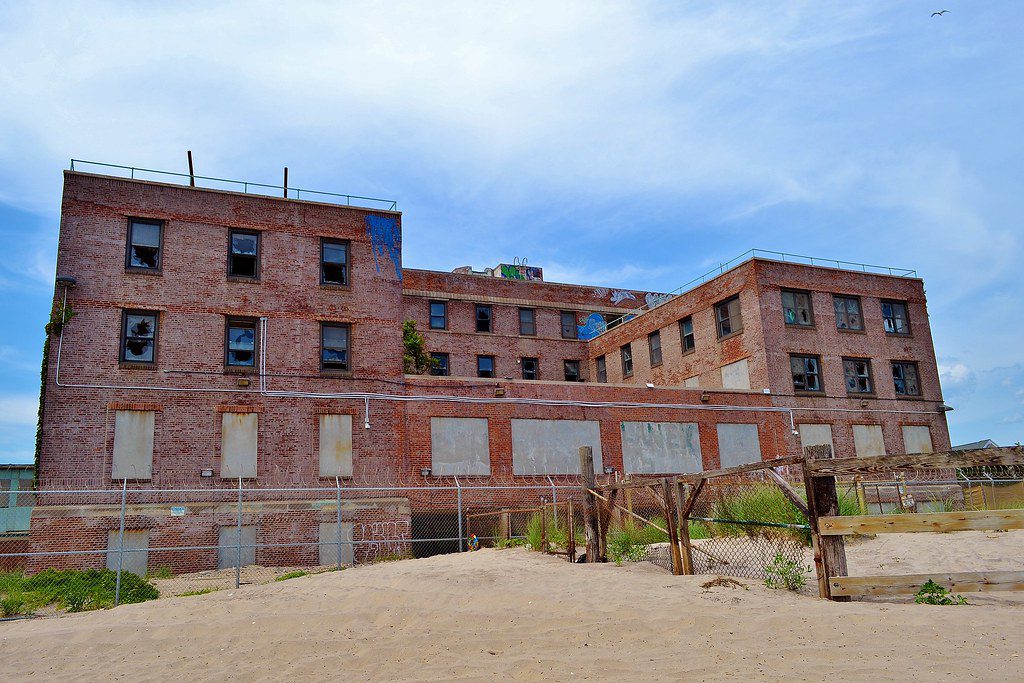

Neponsit Beach Hospital was once located next to Jacob Riis Park, just above the shore of the Rockaway Peninsula. From 1915 to 1955, a tuberculosis sanatorium was housed here. Not only did doctors help patients improve their health, but so did the clean air of the Atlantic. Patients benefited from the hospital’s beachfront location, which provided them with sunlight and relaxation at the beach. Later, the institution became a boarding home for the elderly. However, the building is known not only for happy stories of recovery but also for the terrible event of 1998 that resulted in two deaths. Learn more information at i-queens.
Founded by a social justice activist
The opening of a children’s tuberculosis hospital on the Rockaway peninsula was initiated by Danish–American journalist Jacob Riis. He was a pioneer in documentary photography and rose to prominence as an advocate for social justice. In his book “How the Other Half Lives: Studies among the Tenements of New York,” the journalist described the life of New York’s lower classes as well as the deplorable state of the city’s apartment buildings. Riis used his photographic and journalistic skills to serve the underprivileged in New York City. He attempted to improve the living conditions of the impoverished by displaying the actual state of their homes to the middle and upper classes. Riis advocated for the establishment of numerous municipal parks and playgrounds so that citizens could at least temporarily escape the crowded life inherent in cities.

In the early 1900s, the journalist actively collaborated with the Association for Improving the Condition of the Poor and the New York City authorities to create a tuberculosis hospital as far away from the hustle and bustle of the city as possible, on Rockaway Beach. The goal of establishing an institution was to alleviate the load on other medical facilities. On May 15, 1906, the New York State Legislature passed legislation permitting the purchase of beachfront property in or outside of the city for a maximum of 2.5 million dollars. Furthermore, it was permitted to rent out a portion of one’s property for the purpose of establishing hospitals.
On March 15, 1907, the Association for Improving the Condition of the Poor estimated that it would cost $250,000 to create a sanatorium for people with extrapulmonary tuberculosis. Construction of Neponsit Beach Hospital began right away, but the project was halted two years later due to a drop in the value of shares on the New York Stock Exchange. To raise the necessary funds for construction, the association distributed pictures of “Smiling Joe,” a kid with spinal tuberculosis. Despite being bound to an iron frame, the child smiled cheerfully. The famous philanthropist John D. Rockefeller donated $125,000 to the project. Additionally, funds were collected from various private donations. Construction of the hospital started in January 1914 and was completed in March of the following year, at which point the association transferred the ownership of the institution to the city.
Who could receive treatment here?
Neponsit Beach Hospital mostly treated children. They were brought here from various city hospitals, apartment buildings and orphanages. The main structure housed 122 beds. Patients could distract themselves from thoughts of disease and pain on the balconies and porches, which provided a stunning view of the coastline. The majority of the children treated here came from low-income households or were raised in orphanages. They relaxed on their wheelchairs or crutches in large open areas overlooking the beach or sunbathed on the sand.
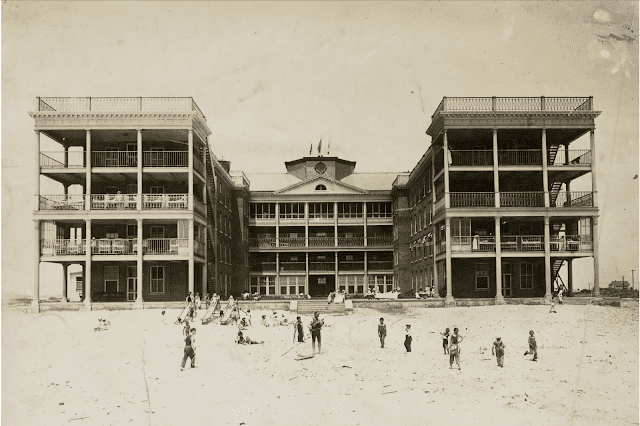
Over the next two decades, the sanatorium treated hundreds of young tuberculosis patients, giving them the opportunity to swim in the ocean and spend time outside under supervision. In 1929, Dr. William Schroeder, Jr., commissioner of city hospitals, announced that the hospital would be expanded to increase the number of beds. The New York City Council allocated $300,000 to expand the facility, so in 1939, a power plant on the hospital grounds was erected, followed by a nursing room two years later. The structure also housed a laundry room, a men’s dormitory and an administrative center. The walls of the facility were adorned with murals and drawings of children playing games, while the surrounding area was enclosed by lush gardens.
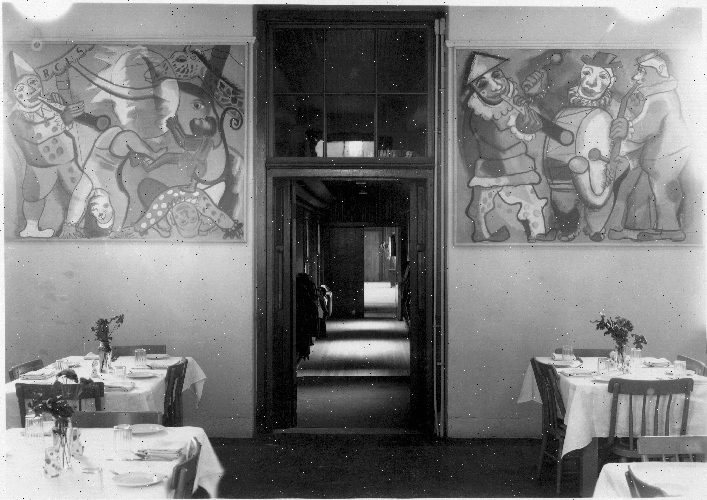
In 1943, 104 patients were relocated in accordance with Mayor Fiorello La Guardia’s order to close children’s facilities to save oil during World War II. Two years of downtime saved 300,000 gallons of oil, resulting in a 10% decrease in fuel oil consumption in New York. The hospital reopened in 1945, this time mostly for veterans. The facility was leased by the US Public Health Service for five years to treat former military personnel with tuberculosis. The institution closed in 1955 due to a decrease in the need for tuberculosis treatment facilities. Later, the facility served as a nursing home, and then as a health center until 1998. Then the institution provided care for elderly people, the majority of whom had Alzheimer’s disease. There were also attempts to relocate HIV/AIDS patients to the building’s wings, but they were not implemented due to the significant risk of rapid spread of the disease.
Forced evacuation
In 1998, the coast of Rockaway was hit by a severe storm. There was a risk that the Neponsit Beach Hospital building could collapse. The city authorities, led by Mayor Rudy Giuliani, claimed that urgent reconstruction was required to ensure the facility’s solid foundation. The mayor’s administration ordered that 282 elderly patients be relocated overnight. They were forced into buses without alerting themselves or their relatives, and then transported to different nursing homes and medical institutions. Two people died during the panic of nighttime evacuation, and another went missing for several weeks.
The federal authorities came to the conclusion that the evacuation was unnecessary and that health officials not only put patients’ lives at risk but also lied to them about their imminent return to Neponsit Beach Hospital. Some say that the rapid evacuation was an elaborate ploy by officials to convert a geographically advantageous area by the sea into a hotel.
Demolition
However, there were no intentions to convert the structure into a recreational area or to restore the sanatorium. As a result, the structure was gradually deteriorating. Although several New York organizations have tried for several years to figure out the best way to use the building, none of them have been successful.
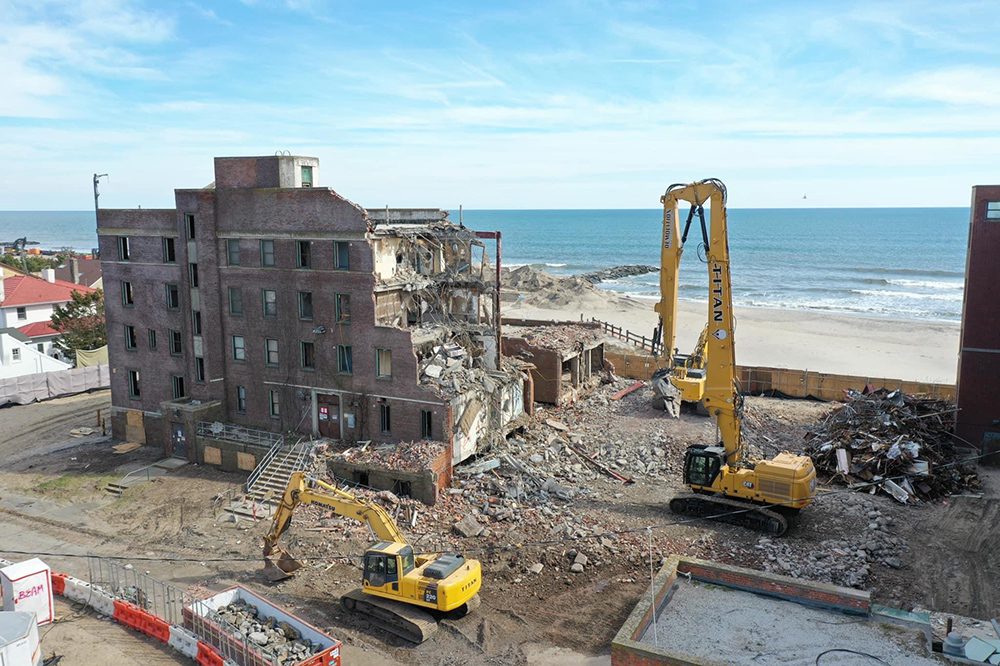
The city declared plans to demolish the abandoned structure in 2022 due to its state of decay. To protect the surrounding area, nearby buildings were inspected and vibration monitors were installed, allowing to easily track property damage. Proper dust control measures have reduced the amount of dust. Furthermore, specialists have taken precautions to prevent rodent-related issues. They also installed sound absorption on the Eastern construction barrier next to the neighboring residences. They were also able to inform the public. The initiative was introduced to homeowners, beach visitors and elected officials. The demolition commenced on March 13, 2023.