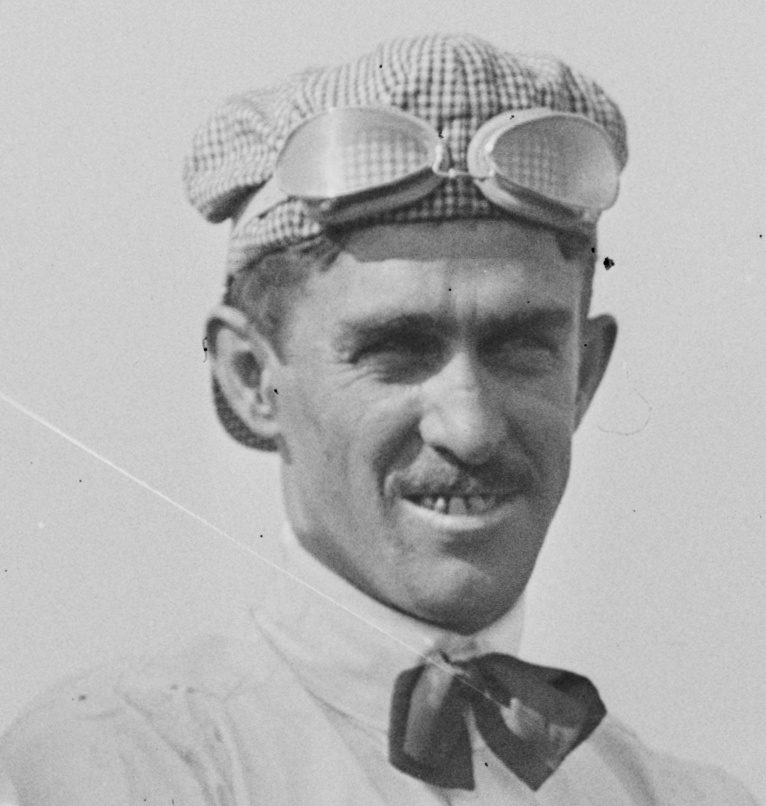

Louis Disbrow became famous as a racer on the ground, sand, boards and even bricks. He raced at almost every track in Indiana. However, his way to fame was not easy. Once, the racer had to prove his law-abidingness and restore his reputation. Read more about the athlete on i-queens.
Charges of murder
Louis Arthur Disbrow was born on September 23, 1876 in Queens into a wealthy family. His grandfather was a millionaire and his father was a rich fertilizer manufacturer who provided comfortable conditions for the family.
Before Disbrow’s success in racing occurred, an unpleasant situation left a mark on his reputation. He was accused of a double murder. His family lived on Long Island and their summer house was located in the census area of Hampton Bays (formerly Good Ground). There, the bodies of Sarah ‘Dimples’ Lawrence and Clarence Foster were washed ashore in 1902.
Louis was named as the culprit. The prosecution argued that he wanted revenge because Lawrence rejected his love and chose Foster. It was said that he beat Foster with an oar and killed Lawrence. Despite the overwhelming evidence against Louis, he was acquitted in 1903.
The speed king
On November 13, 1909, Disbrow took the trophy at the Atlanta 200-mile race after George Robertson (Fiat) and Louis Chevrolet (Buick) suffered mechanical problems. Disbrow piloted Rainer.
After winning the 300-mile race at the Atlantic-Pablo Beach Races in Florida, the driver arrived at the Indianapolis 500 in 1911. This is an annual car race at the Indianapolis Motor Speedway. Competitions take place on the last Monday of May. In 1950–1960, one of the stages of the Formula 1 championship was held here.
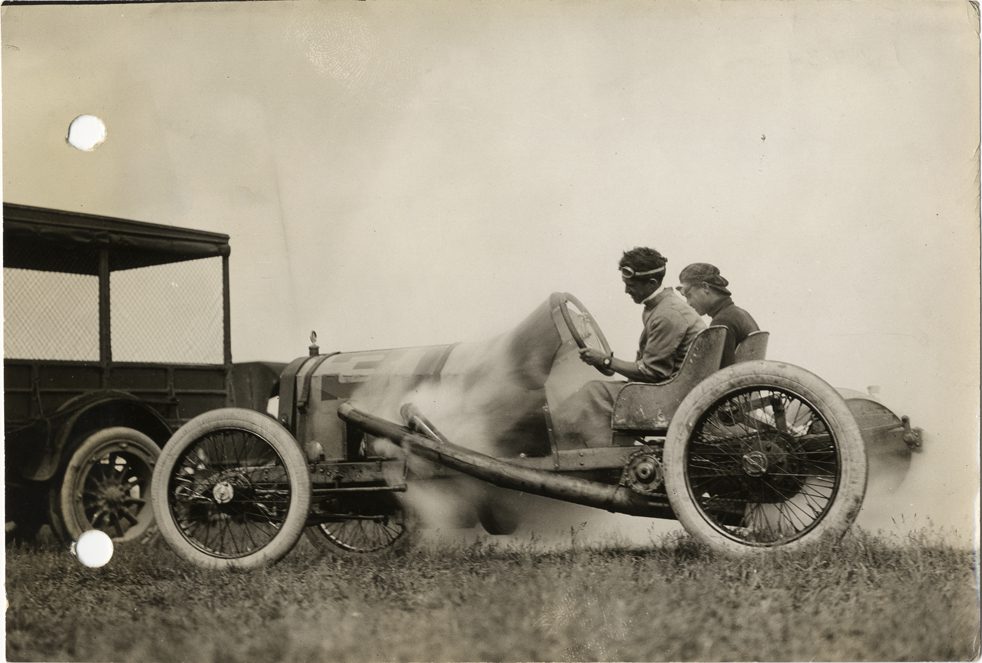
Spectators were impressed by Disbrow’s driving talent and competitive spirit. He competed in the first four Indy 500 races, with his best result being 8th in 1913.
Despite not being very successful, Louis was called ‘The Speed King’ and was considered one of the brightest characters of his era. He also took part in 1910, 1911 and 1915 at the US Grand Prix, one of the stages of Formula 1. This is the world championship of ring racing on open-wheel cars, which takes place under the auspices of the International Automobile Federation. The name of the championship is related to a set of rules (formula) that are mandatory for all participants of the competition.
The racing driver also worked as a mechanic and trainer for the greatest female racing driver of the era, Joan Cuneo. From 1905 to 1912, she competed with both men and women until the racing association restricted racing to men only.
Louis continued to compete even into his 50s. Later, he became a garage owner, an aviator, a manufacturer of racing cars, boats, spark plugs and an engineer.
The story of the living corpse
During his career, Louis drove 300,000 miles and sustained 26 broken bones. One of the worst accidents on the track happened in the city of Albany (Georgia). He was taken for dead and sent to the morgue, where he lay for 9.5 hours.
There are two different versions of what happened later. According to one of them, the dead racer suddenly got up and asked for a cigarette. Another said that he got up with a sheet on his head, scaring the watchman, who ran out into the street. After this incident, the press was full of headlines about the corpse that woke up in the morgue. In fact, Disbrow died after a long disease in July 1939 at the age of 62 in his home in Philadelphia (Pennsylvania).