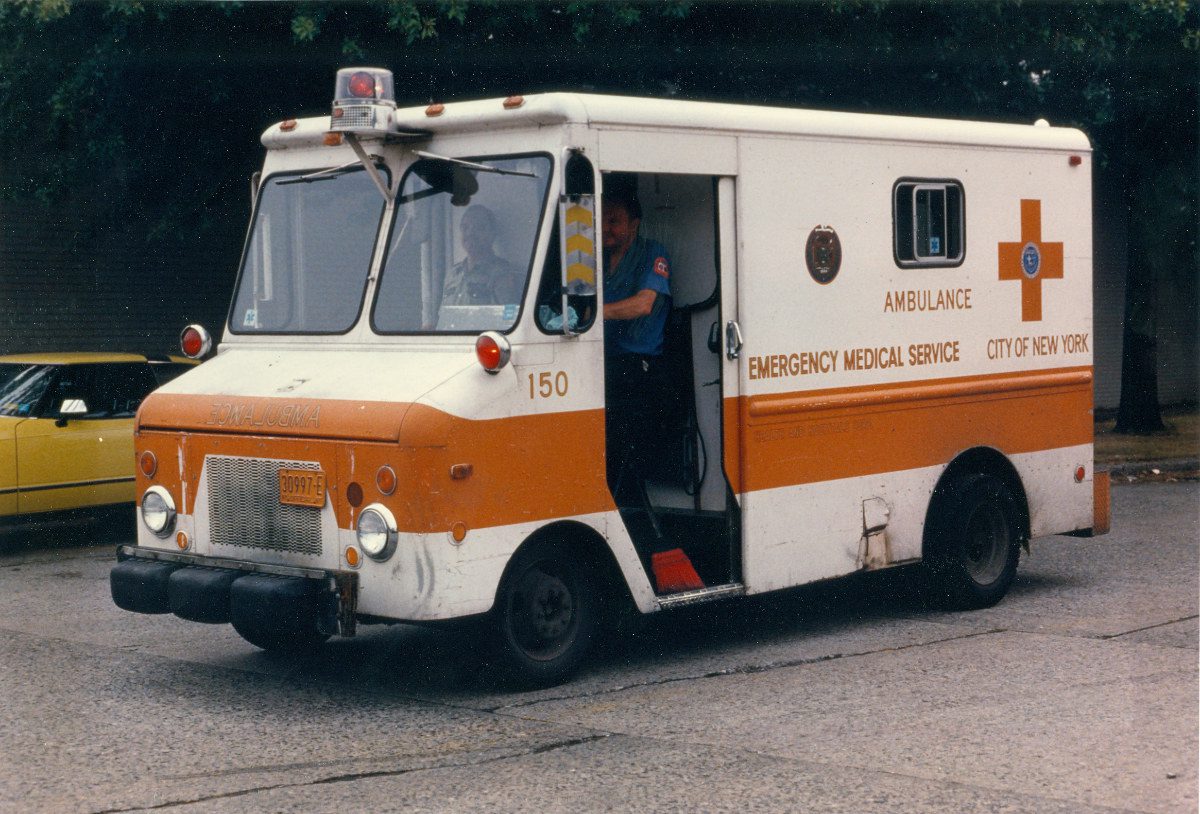

The origins of emergency medical services (EMS) trace back to ancient Greece. In the United States, however, the first municipal EMS began in 1869—in New York City. Read more about its development in the city and specifically in Queens on i-queens.
A Pioneer in the Country
In 1869, Bellevue Hospital, the oldest public hospital in the U.S., established the first ambulance service in New York City and the country. This was made possible by Dr. Edward Dalton, who developed an effective system for evacuating wounded soldiers from battlefields during the Civil War. Ambulance carriages were far from ideal at the time, as injured soldiers often sustained additional injuries during transport. To mitigate this, Dr. Dalton added a suspension system for a smoother ride, a roof for shelter, and a red cross for identification.
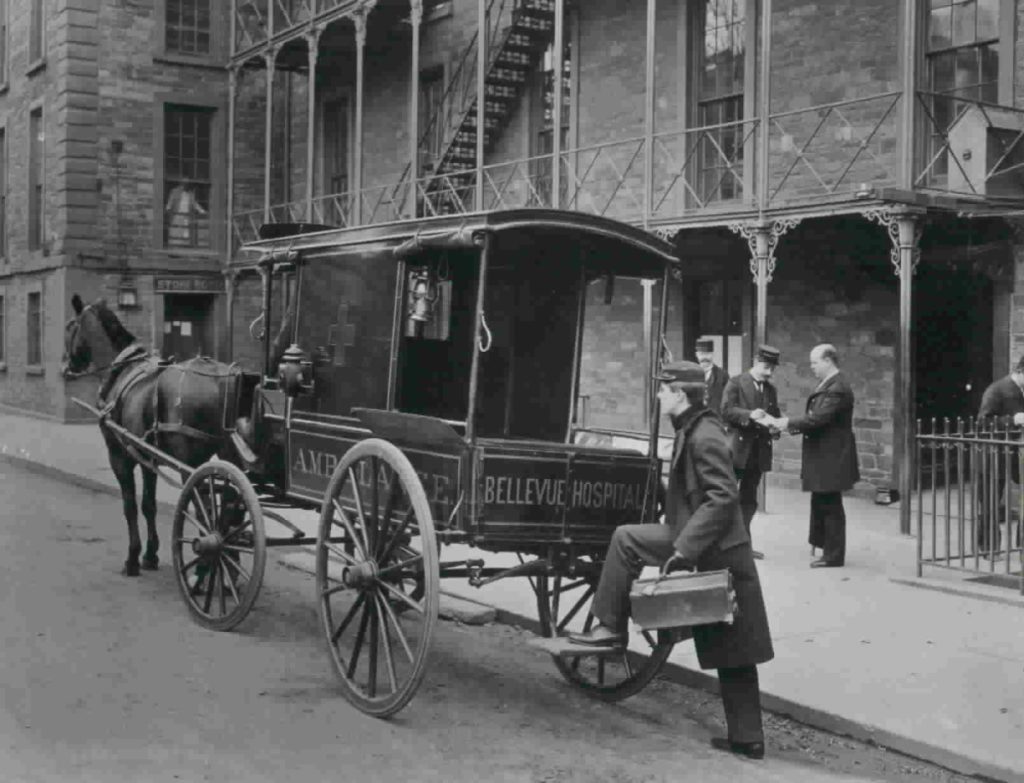
Each ambulance, pulled by horses, was staffed by a driver and an intern. Under the driver’s seat were always a flask of brandy, two tourniquets, bandages, sponges, splint materials for injured limbs, pieces of old blankets, buckle strips, and iron persulfate. There was no portable equipment for oxygen, suction, or immobilization. Most patients were treated on the spot and continued their recovery at home. Those needing hospital transport were moved on stretchers made of leather suspended between two poles.
During its first year, EMS received 1,400 calls, handled by just two ambulances. The following year, five more were added. Over the next few decades, EMS developed rapidly. Each New York City hospital had its own service with a driver and doctor, and the police handled dispatch duties.
The First Female Ambulance Surgeon
The consolidation of New York City in 1898 brought significant changes to most municipal services, with Queens becoming one of the city’s five boroughs. While the police continued to coordinate EMS, hospitals and the Department of Public Charities (later the Department of Public Welfare) staffed the ambulances directly.
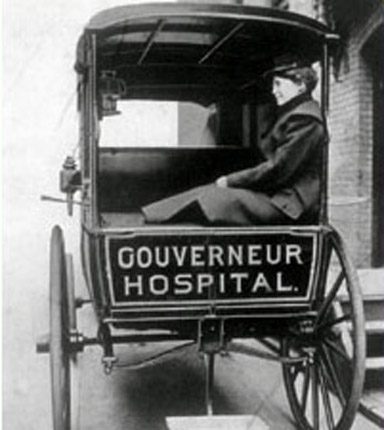
Interestingly, for the first 30 years of EMS history in New York, all ambulance surgeons were men, who were often called upon to break up bar fights. However, in 1903, Emily Dunning challenged this patriarchal system by becoming the first female ambulance surgeon.
Technological Advancements
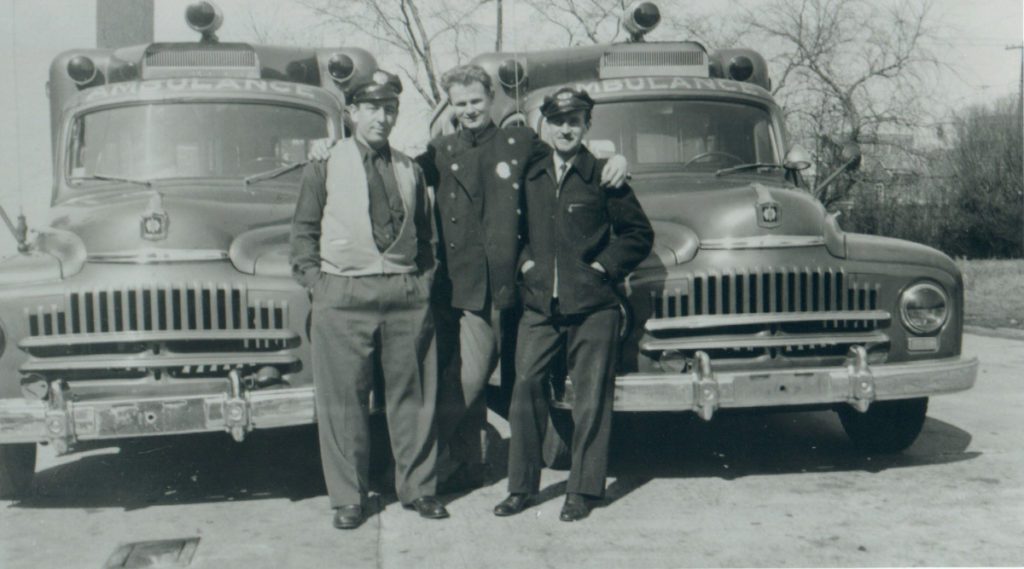
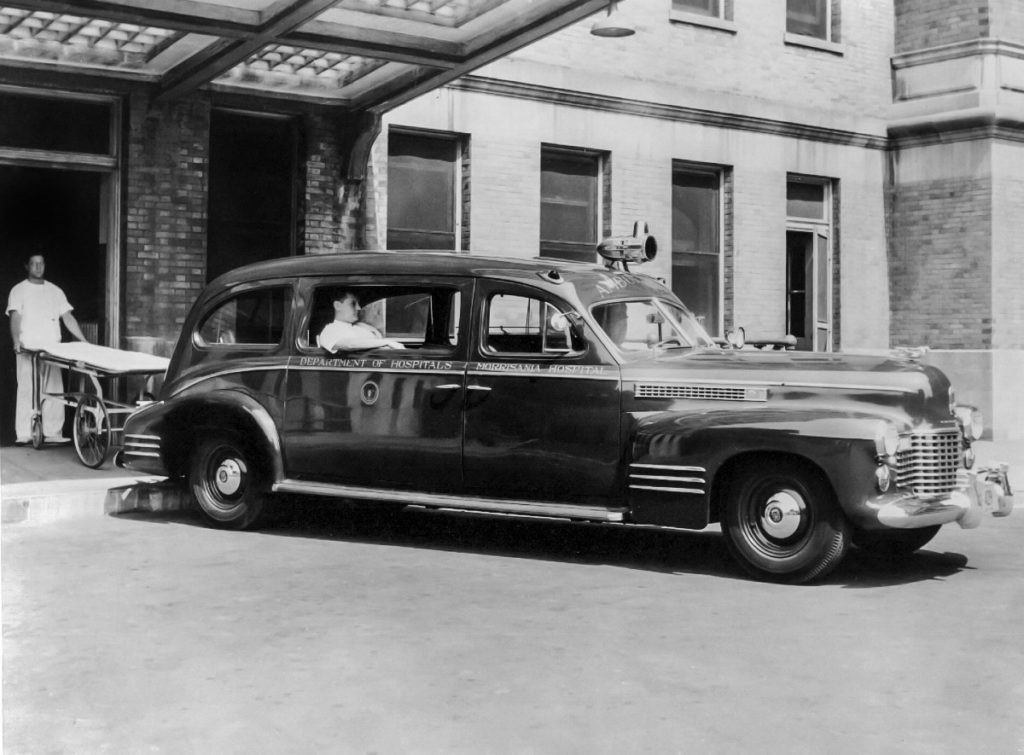
In 1908, New York introduced motorized ambulances, and the last horse-drawn ambulance made its final journey in 1922. In 1929, the New York City Department of Hospitals was established, unifying the city’s hospital system, which had 45 ambulances at the time. By the late 1930s, all ambulances in New York were built on truck chassis. Drivers were responsible for operating and maintaining these vehicles, while each hospital set its own EMS policies.
When the U.S. entered World War II in December 1941, many American doctors and nurses served on the Western Front in Europe, creating a shortage of skilled EMS workers. Nurse assistants and orderlies were recruited to work in ambulances, often against their will.
After the war, military doctors returned to EMS, responding mainly to obstetric cases and field amputations. Other calls were handled by trained EMS physicians who had received first aid training. Ambulances with radio equipment first appeared in 1952.
In 1968, the New York City Police Department and municipal EMS joined the 911 system. Within a year, EMS had a fleet of 109 ambulances. In 1972, an independent EMS communication center (NYC*EMS) took over call handling and ambulance dispatch. There was a dedicated radio frequency for Manhattan and the Bronx, another for Brooklyn and Queens, and one more for Staten Island.
In the mid-1970s, the EMS communications center moved from Manhattan to a new headquarters in Maspeth, Queens. Computerization brought radical changes to communication, integrating the dispatch system into the 911 structure. Older vehicles from the 1960s were replaced with modular ambulances equipped with amenities like oxygen concentrators.
Staff Training and Qualification
In 1970, new federal regulations established the national EMT (Emergency Medical Technician) qualification as a minimum requirement for EMS work. Immediate training programs for EMTs began in New York, eventually expanding to cross-training for ambulance operators and EMTs. EMS personnel started being referred to as “ambulance orderlies.” Around this time, New York also began training paramedics, and the New York Medical Advisory Committee established protocols for medications and treatments for paramedics.
To facilitate communication with dispatchers and supervisors, EMS crews were given portable radios. Regular training sessions taught EMS staff how to handle incidents involving mass casualties, such as those at an airport. In 1980, the NYC*EMS center launched a one-week emergency vehicle operator course.
In 1985, the EMS Academy, which had operated at Queens General Hospital for seven years, moved to its own facility in historic Fort Totten. Here, paramedics received training, advanced their skills, learned emergency vehicle operation, and were educated on hazardous materials. In 1995, EMS instructors began teaching firefighters and police officers how to use defibrillators, devices that restore heart function through electric pulses.
In the mid-1990s, EMS staff and paramedics in New York City responded to over 4,000 calls a day. In the following decade, some of them received additional training as rescue medics and learned to work with hazardous materials. After the September 11, 2001, attacks, the Bureau of EMS received additional equipment to counteract weapons of mass destruction. The attacks by Al-Qaeda resulted in 2,996 deaths, and more than twice as many were injured.
In 2018, EMS paramedics responded to an average of 5,100 calls per day. During the COVID-19 pandemic, calls sometimes exceeded 7,000 per day. Specialists answered tens of millions of requests for help and saved countless lives, sometimes at the cost of their own. For example, during the COVID-19 pandemic and the September 11 attacks, EMS staff suffered devastating losses while attending to the sick and wounded. In 2022, the 147th EMS worker in New York City lost their life in service.