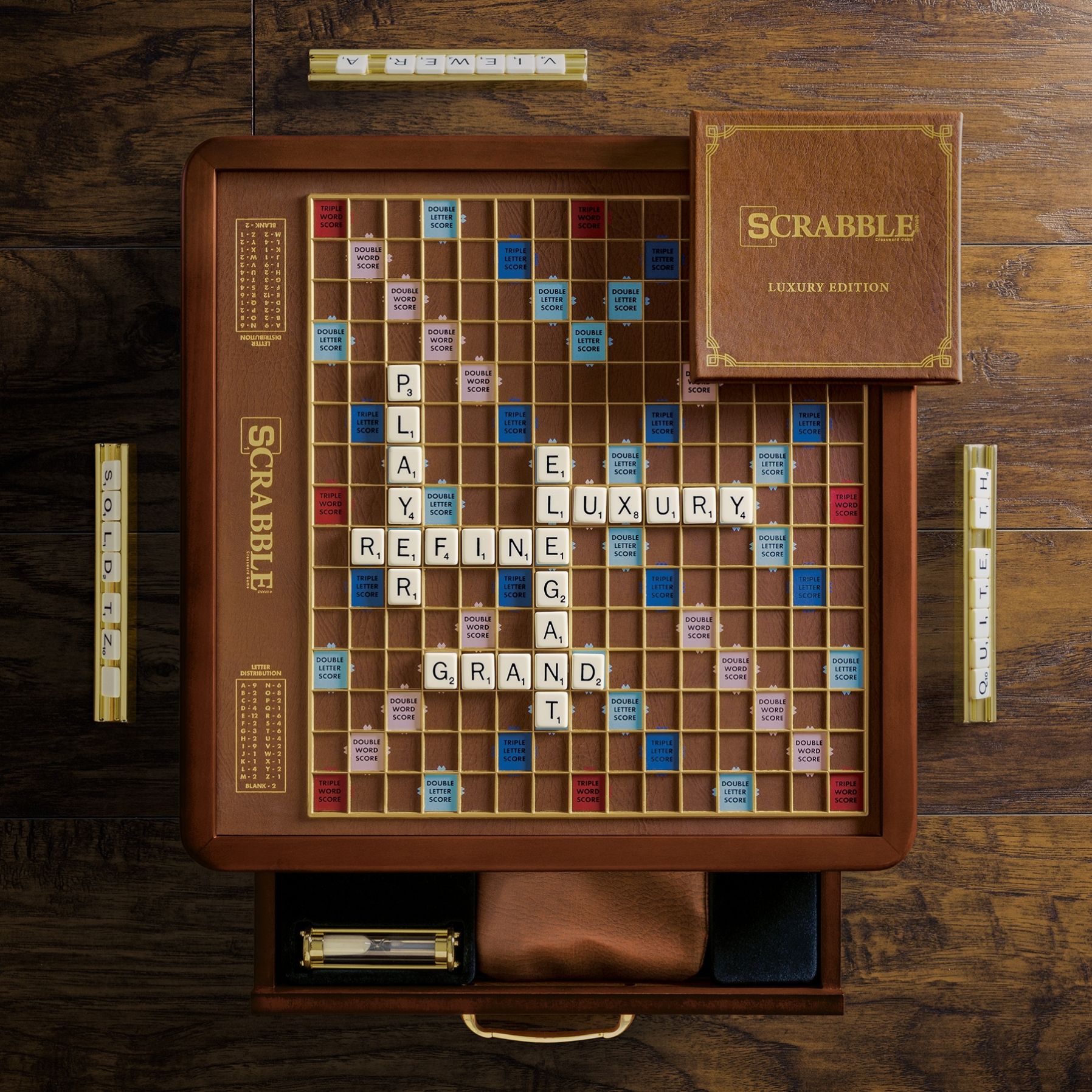

The game Scrabble can be found in every third American household. It is enjoyed by different social classes, ranging from the presidential and royal families to prisoners. Its players are among the most loyal in the world. Scrabble has been translated into many languages, from Arabic to African. The creator of the legendary game was a Queens resident, however, he himself never achieved commercial success. Alfred Mosher Butts proved to be an excellent game creator, but not a marketer. Read more about how the game gained popularity and the difficulties it faced on its path to success at i-queens.
Game rules
Scrabble is a board game in which two to four players create words from available letters on a 15 x 15 board. Each turn, a player can add one letter from the available letters so that one or more words are formed later. If the player is unable to compose a word, they skip a turn.
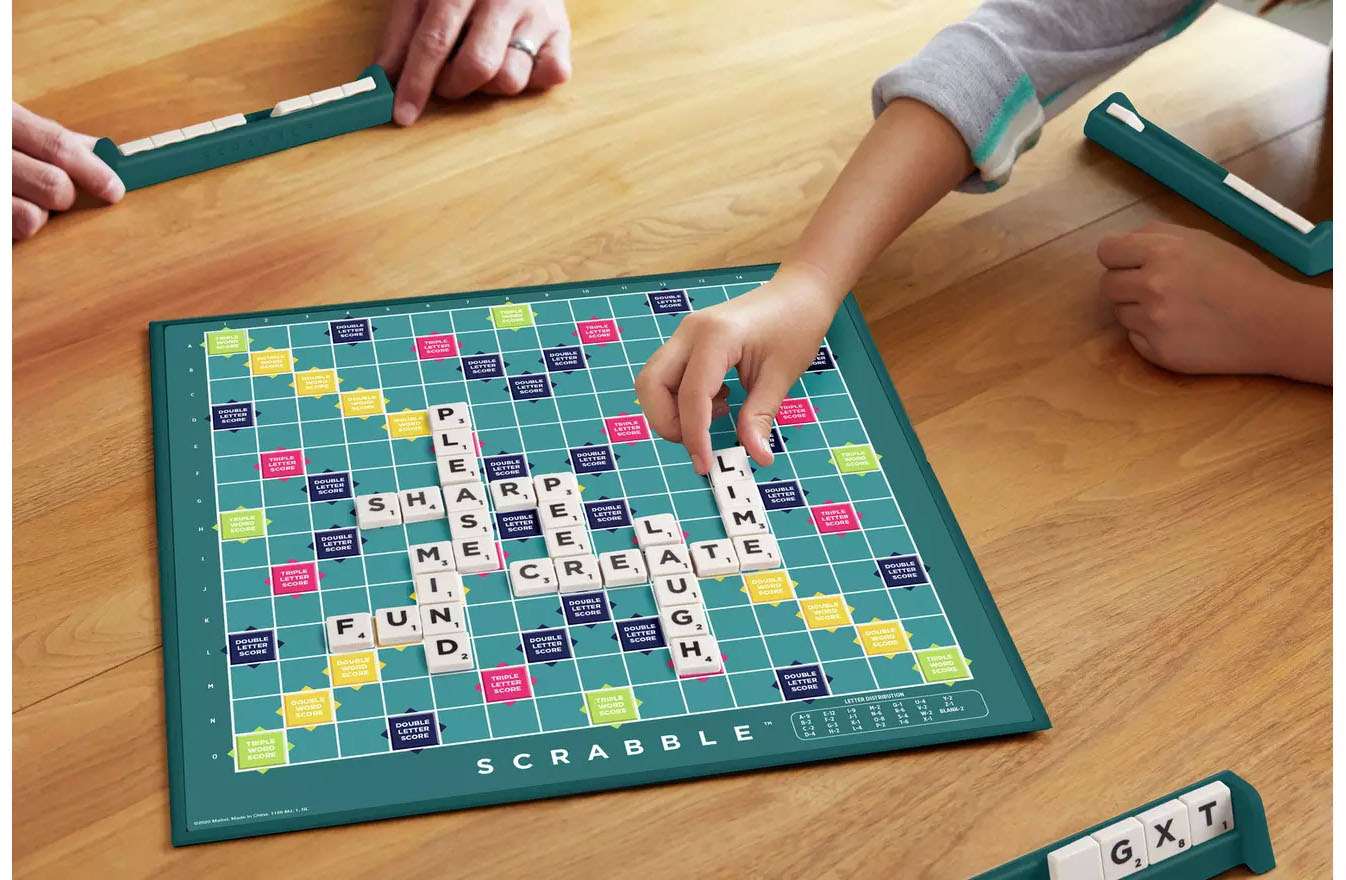
Each letter has a numerical value, and players score points by adding the values of the letters in the words they built up. The winner is the person who scores the most points. Words are read from left to right in rows or from top to bottom in columns, similar to how a crossword puzzle works. They must be on the standard dictionary or lexicon list.
Created by an architect
Alfred Mosher Butts, an architect from Poughkeepsie, New York, was one of the millions of people who lost their jobs during the Great Depression. In the early 1930s, while sitting in his apartment in Queens, he decided to invent a board game to distract Americans from the dire economic situation. Analyzing the market, Butts discovered that board games are divided into three categories: number games (such as dice and bingo), mobile games (chess and checkers) and word games (anagrams).
Butts decided to combine the features of anagrams with crossword puzzles. The creator examined numerous pages of major newspapers to determine the frequency of occurrence of each letter. There is also speculation that he was inspired by a story he read as a boy called “The Gold-Bug” by Edgar Allan Poe. In it, a pirate’s precious map is deciphered by matching characters with letters based on their frequency in English. Alfred called the game he invented “Lexiko,” but eventually changed it to “Criss Cross Words.”
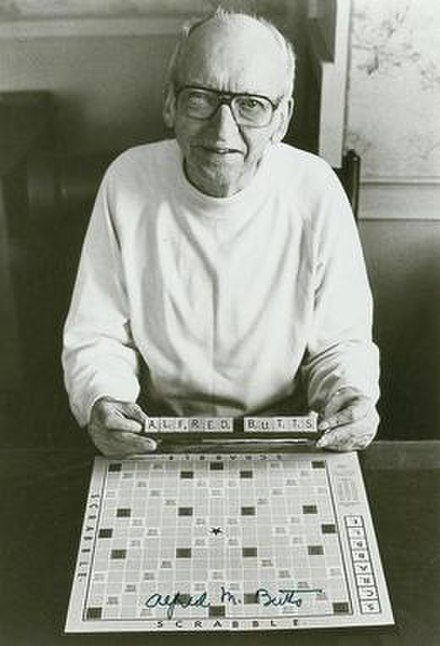
Butts loved chess, crosswords and puzzles, and their influence can be seen in the game. Its first version assigned players a somewhat difficult challenge of composing words using nine of the ten available letters. Furthermore, one key component was missing – the board. Players received points based on the length of the created words. In 1938, Butts took advantage of the popularity of crosswords by assigning different meanings to letters and adding a simple 15 x 15 grid. The New Yorker applied for a patent but was rejected.
Commercialization process
In an effort to draw in a corporate sponsor, Butts changed and adjusted the game rules for more than 10 years. Well-known gaming manufacturers all refused to make use of the invention. By mid-1934, the innovator had only sold 84 handmade sets, losing 20 dollars. Together with his wife Nina, Butts gathered friends and neighbors to play in the hall of the local Methodist Church, but the game remained popular only locally.
However, this did not discourage the determined architect. He subsequently met game designer James Brunot, who purchased the rights to produce the game in exchange for royalties from each unit sold. Brunot’s contribution was huge: he came up with the iconic color scheme, a bonus for using all seven tiles and the very name “Scrabble”.
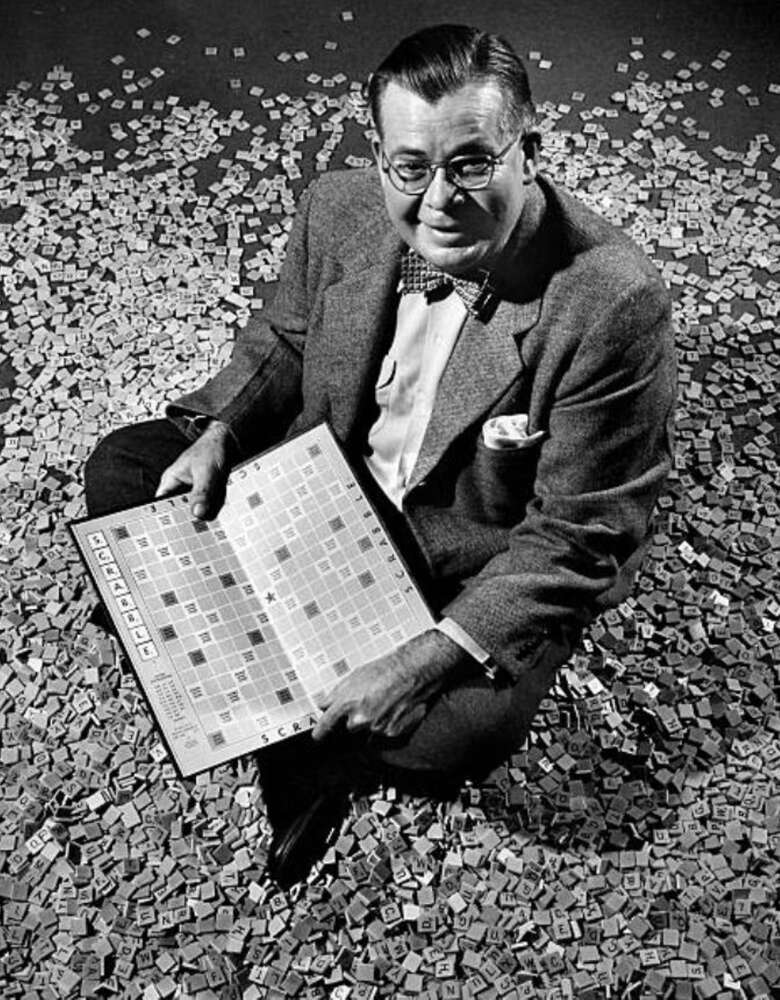
Brunot and his wife produced the game at their home in Newtown, Connecticut. In 1948, the Brunots rented an abandoned school in Dodgington, Connecticut, where they manufactured games with the help of their friends. At the same time, James successfully applied for copyright to Scrabble. After some time, Brunot began producing the game in other locations, from where it was sent to the factory for assembly and shipment.
In the gaming business, new products typically gain popularity slowly and among a relatively small number of consumers. The same happened with Scrabble. In 1949, Brunot produced 2,400 sets and lost 450 dollars. Things started to get better in the early 1950s when the head of the US department store chain Macy’s ordered a game of Scrabble for his company after discovering it while on vacation. Following that, the novelty of the gaming business soon extended across the United States.
In 1952, Brunot, unable to meet demand, granted a license to Long Island-based game manufacturer Selchow and Righter. Soon, the invention quickly became the subject of numerous stories in the country’s media. In 1972, Selchow and Righter purchased the trademark from Brunot, granting them exclusive rights to all products of the Scrabble brand. Brunot earned about 1.5 million dollars in royalties.
In 1986, Selchow and Righter was bought out by doll manufacturer Coleco Industries. Three years later, the company declared bankruptcy, and its main assets, Scrabble and Parcheesi, were purchased by Hasbro, a toy and board game maker. In 1994, a scandal erupted when Hasbro revealed plans to remove nearly 200 words that were considered too offensive from the official Scrabble dictionary (for example, “fat man”). In the end, Hasbro compromised and published two officially approved dictionaries: one for entertainment and school games and another for official tournaments and clubs.
As for the inventor himself, Alfred Mosher Butts received a fee of $265,000, which he used to purchase a farmhouse. For the remainder of his life, he enjoyed playing Scrabble with his family and friends. At the age of 80, Butts created another game, Alfreds Other Game, which similarly requires word composition. He died in April 1993, at the age of 93.
Extreme popularity
Scrabble is played by both amateurs and professionals. Fans of the game include Queen Elizabeth II, singer Madonna, businesswoman Martha Stewart, politicians Barack Obama, Bill and Hillary Clinton, actor Keanu Reeves, financier Michael Milken and others. By the way, the latter arranged a Scrabble competition in prison in the early 1990s, while serving a sentence for securities fraud.
Hundreds of children and students compete in state and regional Scrabble championships across the United States. On April 26, 2003, Boston hosted the first annual National School Scrabble Championship. In Senegal, a country in West Africa, Scrabble is recognized as an official sport.
By the way, the best results can be achieved by composing uncommon words, which requires reading and high intellectual abilities. For example, when Paul Allan won the British Scrabble championship in 2013, he used the words “coniine” (a chemical compound) and “bandura”. The value of Scrabble doubles and triples as players puzzle and broaden their vocabulary. Scrabble, with minimal change from its original version, demonstrates that the best games allow players to learn unconsciously while communicating effectively.
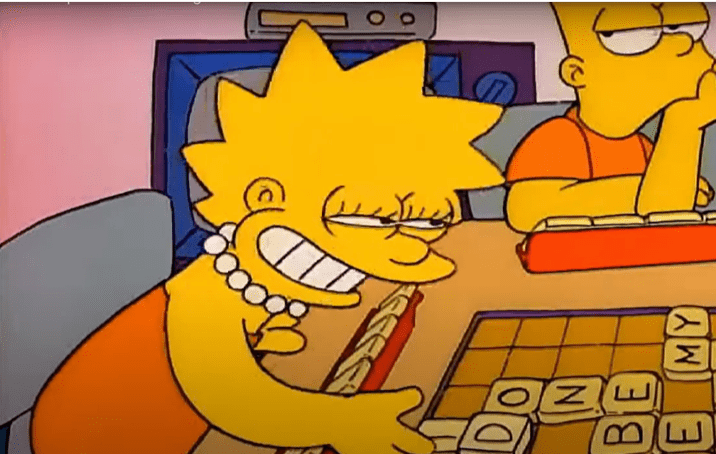
Unsurprisingly, the game has made its way into pop culture as well. Scrabble is featured in episodes of “Seinfeld” and “The Simpsons,” as well as in some popular songs. For example, Sting sings in “Seven Days”:
IQ is no problem here
We won’t be playing Scrabble for her hand I fear
The renowned game has also been mentioned in the literature. In “The Handmaid’s Tale” by Margaret Atwood, for example, the game becomes illegal when the Commander forces Offred to play against him.