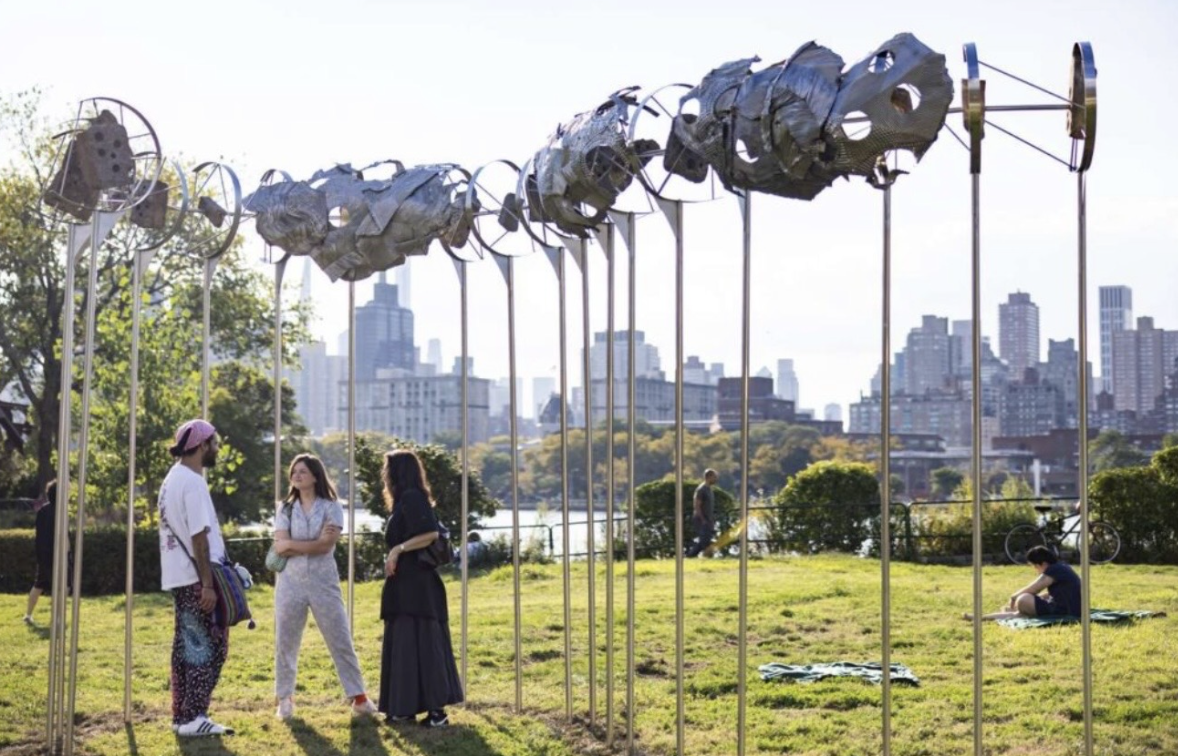

Public art in Queens is a vital cornerstone of New York City’s cultural landscape. Here, monumental sculptures, immersive installations, and outdoor murals turn public spaces into a museum without walls. From the iconic Unisphere in Flushing Meadows to Socrates Sculpture Park—born on the grounds of an abandoned landfill—local art tells compelling stories of globalization, community resilience, and social change. In this article on i-queens.com, we explore the most famous sculptures in Queens, their origins, hidden meanings, and the vibrant world of open-air contemporary art.
The Unisphere in Queens: The Story Behind the Flushing Meadows Landmark
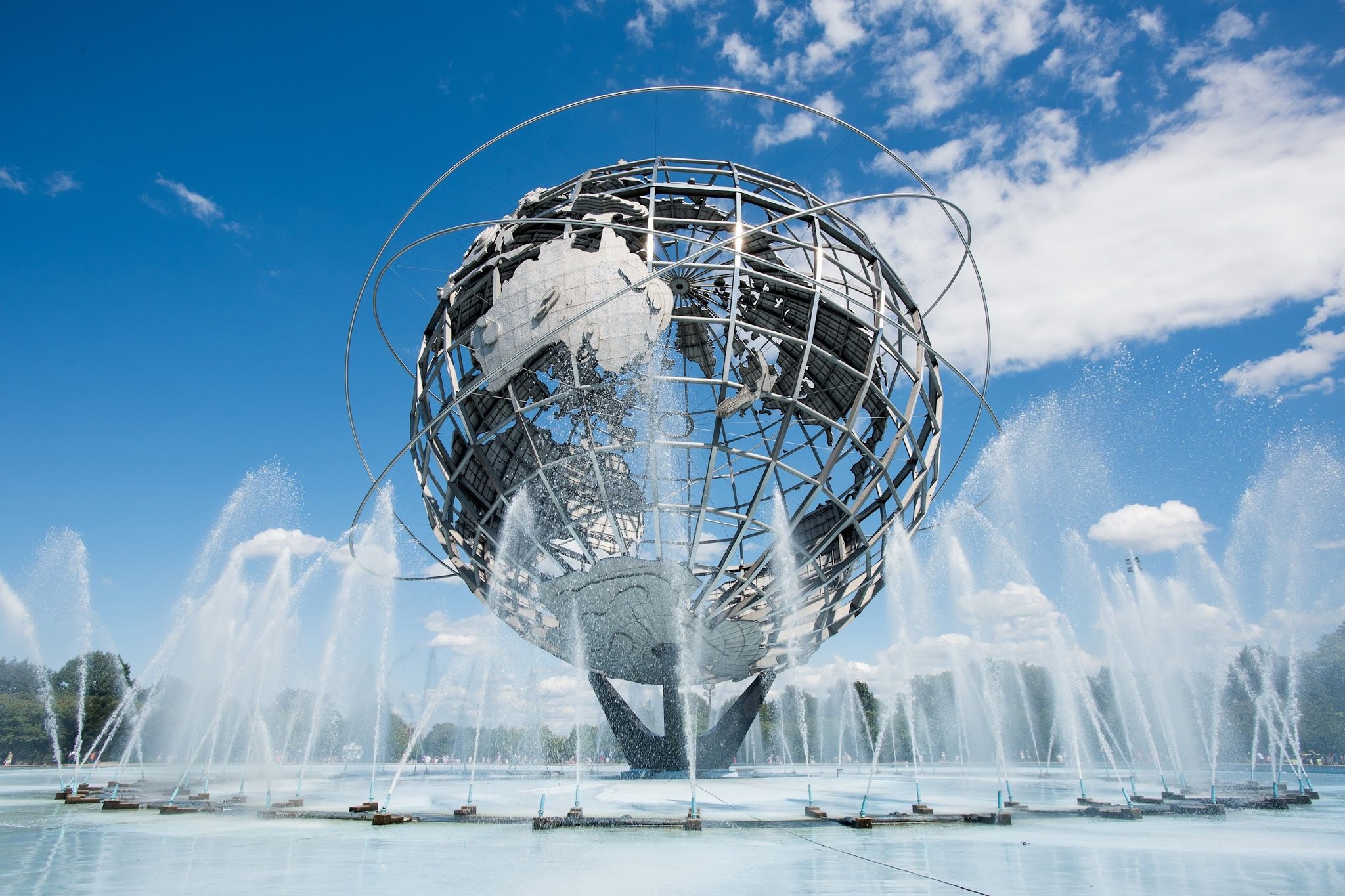
One of the most recognizable installations in Queens and across all of New York City is the Unisphere—a colossal spherical representation of the Earth crafted from stainless steel. Rising 12 stories high, this monumental globe serves as the crown jewel of Flushing Meadows–Corona Park.
Origins and Vision
Renowned landscape architect Gilmore D. Clarke designed the Unisphere specifically for the 1964–1965 New York World’s Fair. Clarke first sketched the concept while on an airplane flight in 1960. By early 1961, New York City Parks Commissioner Robert Moses approved the blueprint after rejecting two earlier proposals. Built by the American Bridge Company (a division of U.S. Steel) between March and August 1963, the globe became the visual icon and focal point of the Fair. Dedicated to the theme “Peace Through Understanding,” it celebrated the dawn of the Space Age and honored humanity’s shared achievements.
Legacy and Contemporary Reinterpretation
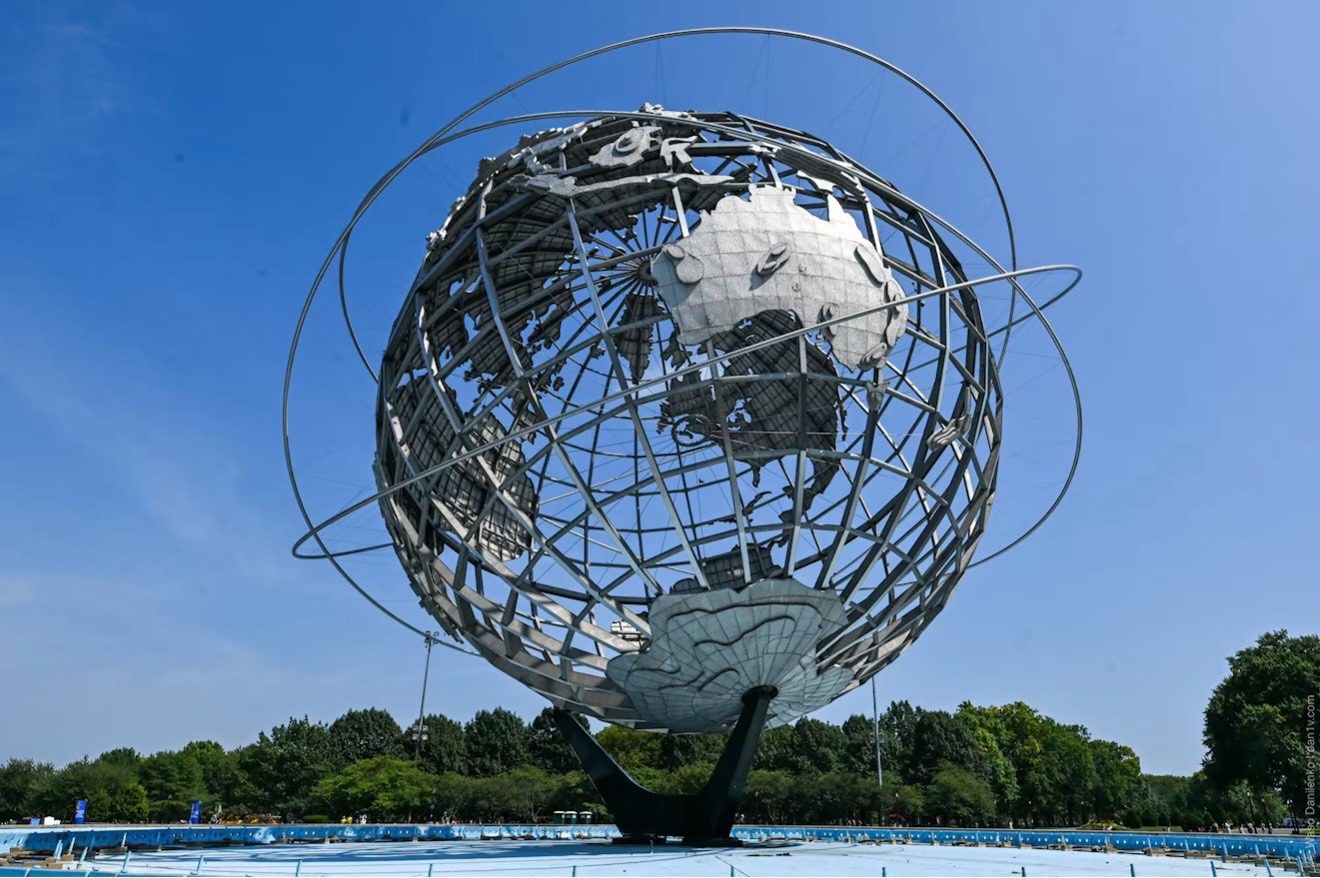
More than 51 million visitors saw the Unisphere during the World’s Fair. Once the event concluded, the globe remained in place, evolving into an enduring attraction and the unofficial symbol of Queens. In 1995, the monument was officially designated an official New York City Landmark.
Contemporary artists continue to engage with this iconic space. Notably, renowned artist Ai Weiwei surrounded the Unisphere with his 1,000-foot-long installation Circle Fence. By weaving metal mesh structures around the perimeter, he created a visual global border, sparking dialogue on rising nationalism and anti-immigrant sentiment across modern society.
Socrates Sculpture Park in Astoria
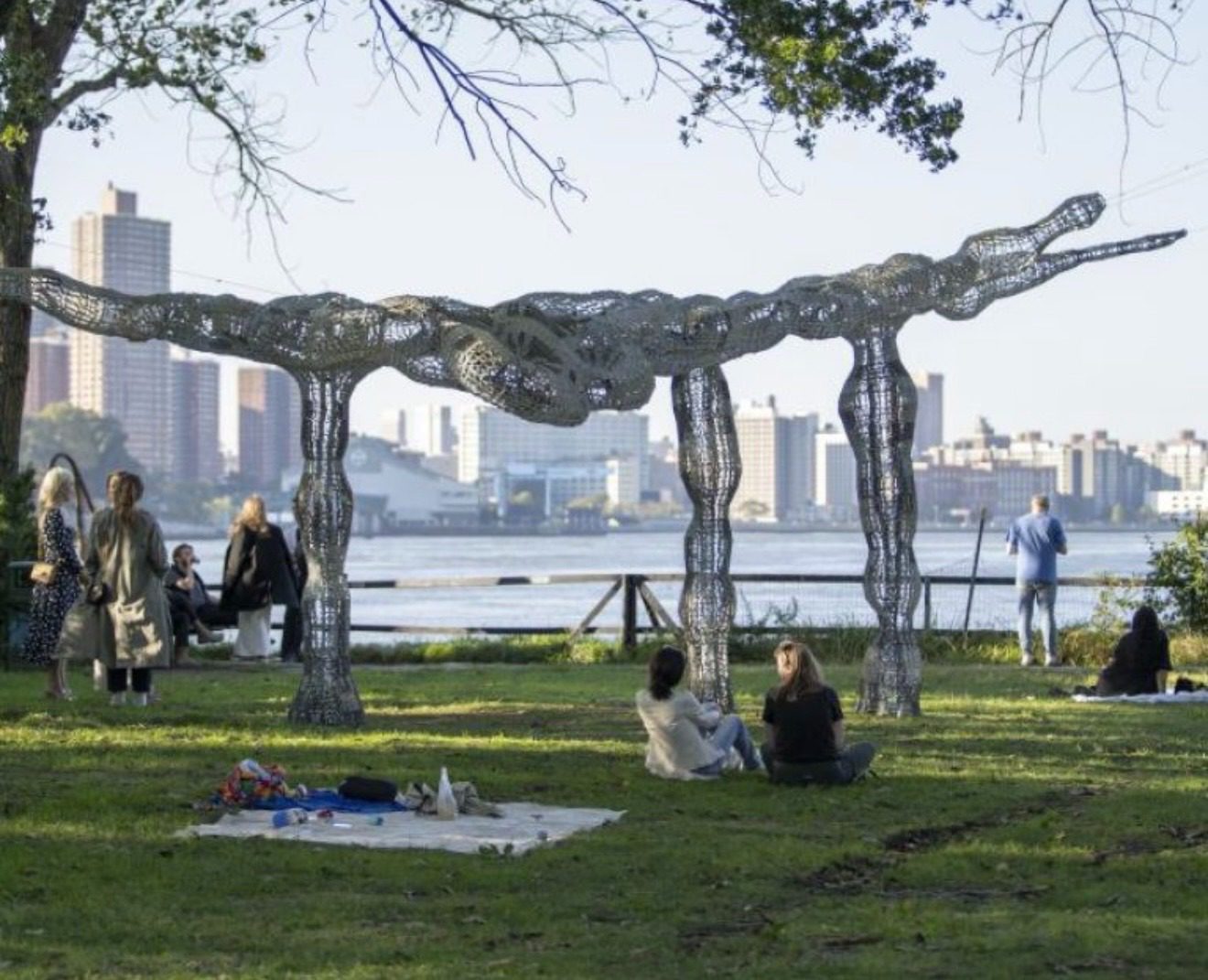
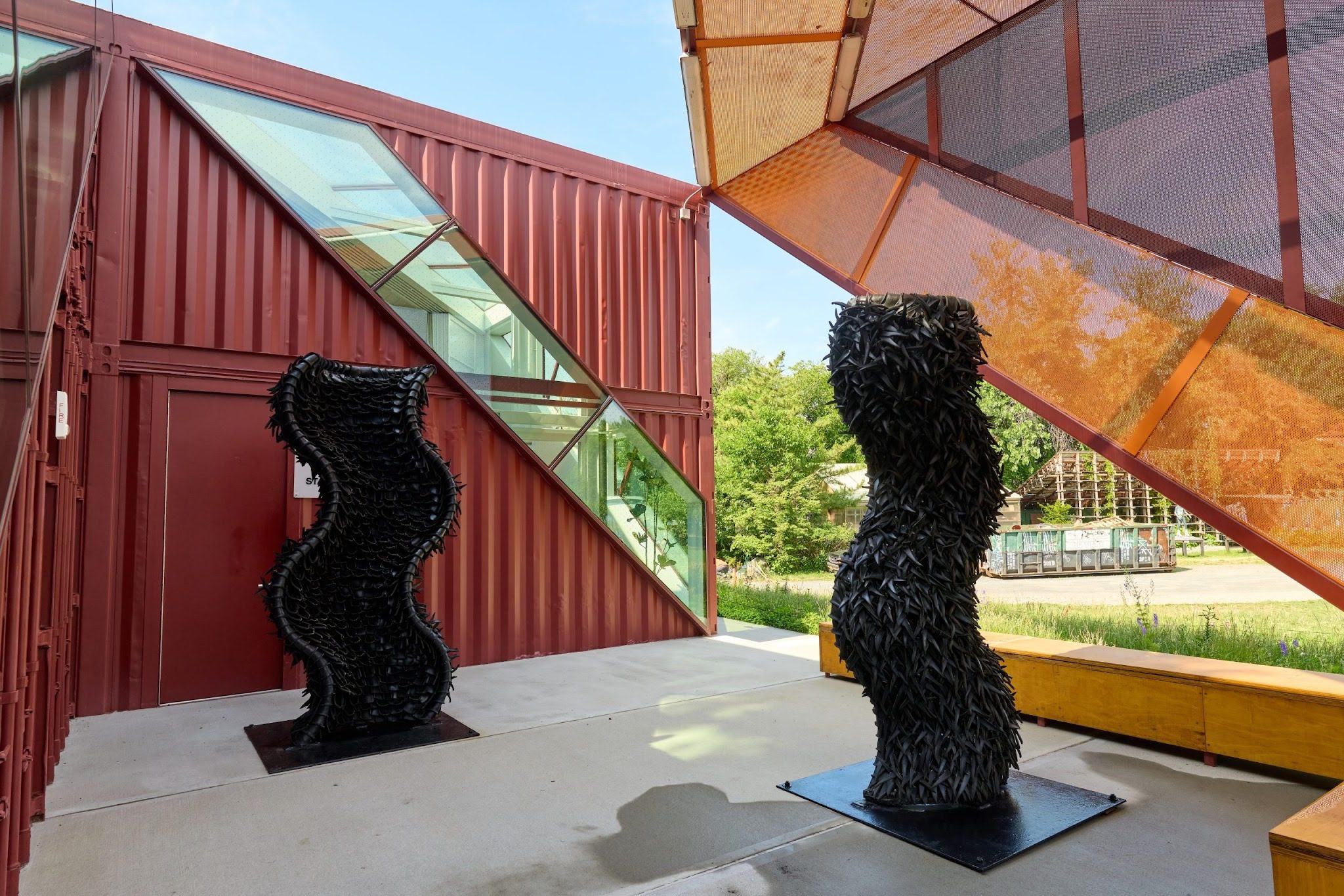
Socrates Sculpture Park is New York City’s premier outdoor venue dedicated specifically to large-scale sculptures and multimedia installations. Located at the intersection of Broadway and Vernon Boulevard, it bridges Astoria and Long Island City.
A Radical Urban Transformation
The park’s history stands as an inspiring blueprint for radical land reclamation. Until 1986, this 4-acre (1.6 ha) waterfront parcel—perched above the buried mouth of Sunswick Creek—served as an abandoned illegal dumpsite. American sculptor Mark di Suvero rallied fellow artists and local youth to clean up and revitalize the wasteland, turning an urban blight into a world-class creative hub.
Preservation and Community Growth
For its first 14 years, the park operated under temporary status. Its future hung in the balance when developers attempted to purchase the site for luxury housing and a marina. Fortunately, in 1998, Mayor Rudolph Giuliani granted it permanent city park status, shielding it from development. Over four decades, the space has woven together art, ecology, and community life. Today, it hosts arts education programs, competitive residencies for artists, and workforce training, welcoming roughly 89,000 visitors every year.
The Noguchi Museum in Long Island City
Just steps away from Socrates Sculpture Park sits The Noguchi Museum. This intimate two-story sanctuary is dedicated entirely to the legacy of the visionary Japanese American artist Isamu Noguchi.
The Visionary Behind the Space
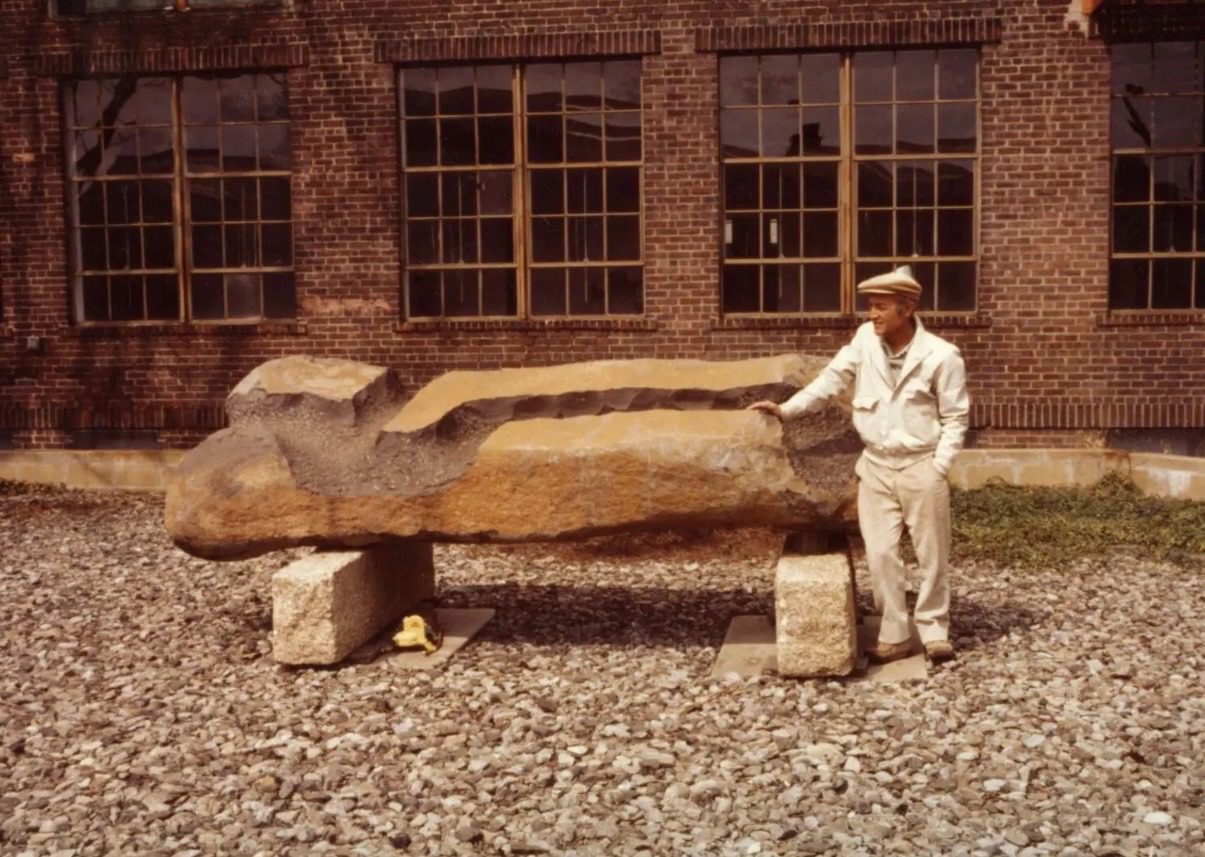
The museum opened in 1985 inside a 1920s red-brick industrial facility that Noguchi purchased, designed, and renovated himself. The artist added a serene concrete pavilion to serve as the entryway and gallery for his monumental basalt works. He preserved the raw steel and timber beams of the factory alongside its original metal ceiling. This space holds a distinct honor: it was the first museum in the United States conceived, designed, and curated by a living artist to display their own life’s work.
The Collection
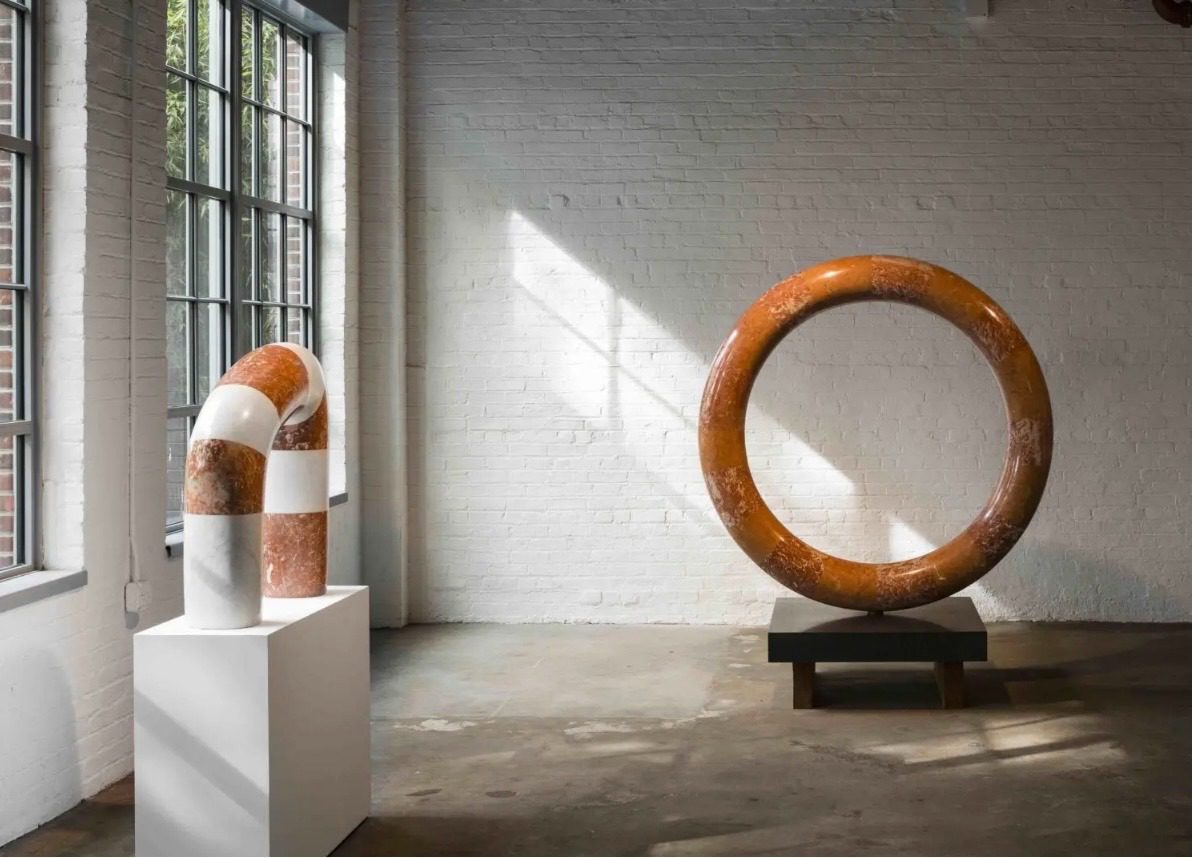
Inside, the museum features a wide array of Noguchi’s work, highlighting his mastery of stone, wood, metal, and light. He made significant contributions not only as a master sculptor, but also as the creator of the iconic bamboo-and-washi-paper Akari light sculptures and striking stage sets for modern dance. His expansive philosophy is best captured in his own words:
“Everything is sculpture. Any material, any idea without hindrance born into space, I consider sculpture.”
The complex also features an exquisite outdoor sculpture garden, lush with native tree species from both Japan and the United States.
“The Triumph of Civic Virtue”: History and Controversy
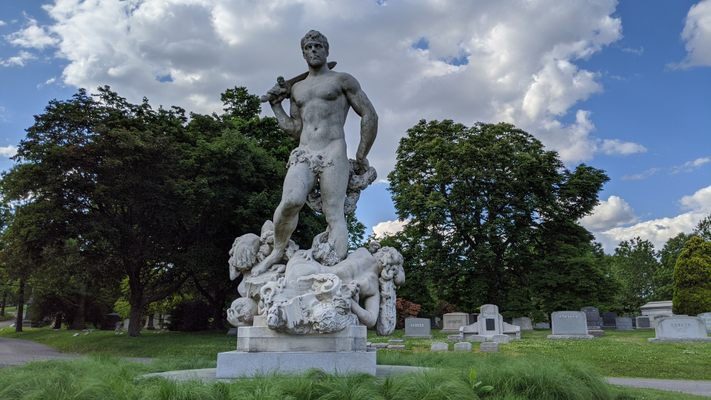
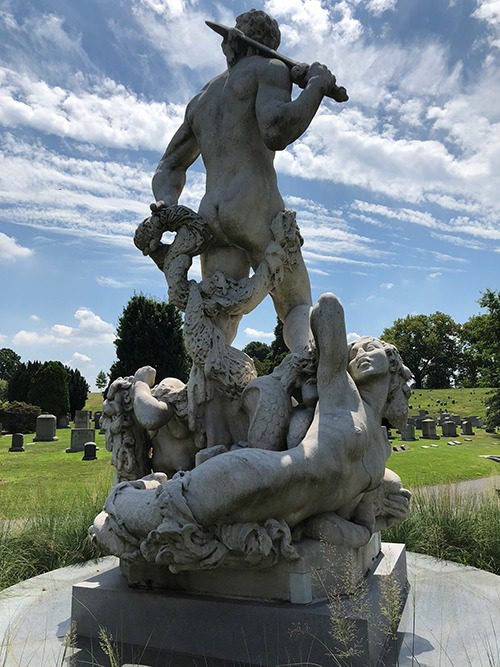
Not every public monument meets universal praise. The Triumph of Civic Virtue, sculpted by Frederick William MacMonnies, carries one of the most embattled histories in American public art.
The Commission
Former Mayor George B. McClellan Jr. commissioned the monumental fountain using funds bequeathed by socialite Angelina Crane, who left $53,000 to New York City in 1891. Intriguingly, the wealthy benefactress left her own daughter only five dollars, dedicating the rest of her fortune to the city and charitable causes. Originally, the fountain was designed for City Hall Park in Manhattan.
Protests and Exile
The sculpture features a muscular, nude youth (Hercules) representing Civic Virtue triumphing over vice and corruption. However, MacMonnies allegorized vice as two female figures (Sirens) pinned beneath the hero’s feet. Even before its unveiling, the sculpture triggered intense public backlash. The Art Commission repeatedly rejected MacMonnies’ initial sketches due to their scale and provocative imagery. Persistent protests eventually drove the statue to Kew Gardens in Queens, but outrage followed. It was ultimately banished from civic view altogether and relocated to Green-Wood Cemetery in Brooklyn.
The Art in the Parks Program and Contemporary Street Art
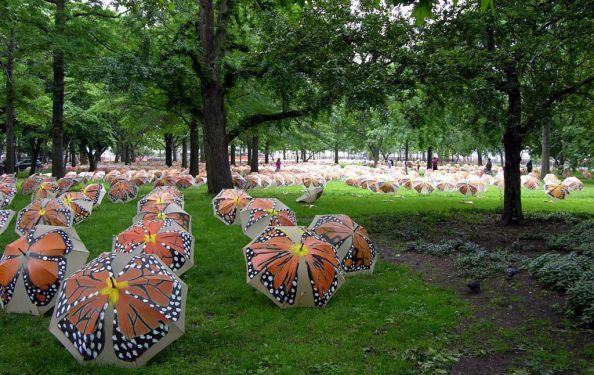
Public art in Queens stays vibrant through rotating exhibits and grassroots municipal initiatives. A driving force behind this is the Art in the Parks program, launched by NYC Parks in 1967. The initiative offers creators the chance to install temporary sculptures, murals, and site-specific pieces, turning everyday green spaces into accessible open-air galleries.
Queens has proven to be an exceptionally fertile ground for these projects. Standout works from recent years include Hospicio Cabañas (Playable Stage for Thunder Hawk) by artist Karl Orozco—an engaging project that fused Mexican cultural archetypes, theatrical staging, and modern technology.
Another highlight was Pavilion Landing, an imaginative sculptural shelter conceived by Yvonne Shortt alongside Joel Esquite and Mayuko Fujino. The installation drew direct inspiration from the futuristic architecture of the 1964–1965 World’s Fair, which originally gave Flushing Meadows its distinct identity.
Other Hidden Gems: The Rocket Thrower and the Tom Seaver Statue
Beyond headline attractions, Queens is home to several monuments that fly under the tourist radar while anchoring the neighborhood’s character. In Flushing Meadows–Corona Park, keep an eye out for The Rocket Thrower—Donald De Lue’s soaring bronze figure inspired by the space-age optimism of the 1964–1965 World’s Fair.
Over by Citi Field in Flushing stands the dynamic bronze statue of legendary Hall of Fame pitcher Tom Seaver, crafted by sculptor William Behrends. It honors the borough’s proud athletic heritage and its deep bond with the New York Mets.
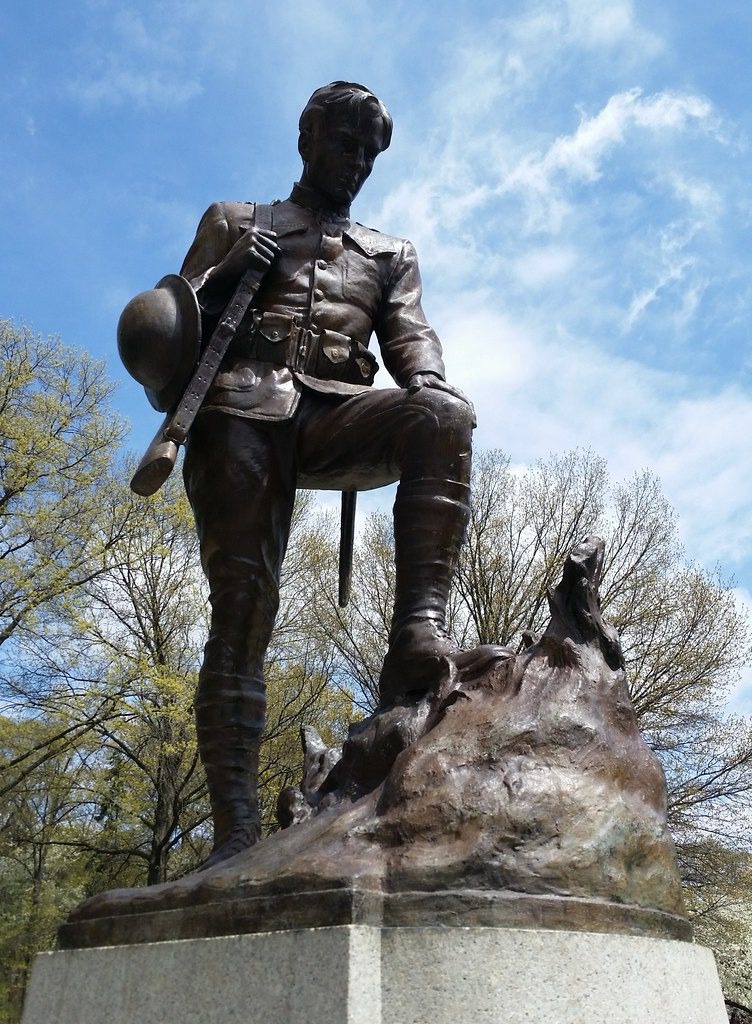
Meanwhile, nestled in Forest Park within Richmond Hill is the Richmond Hill War Memorial, dedicated to local residents who lost their lives in World War I. Sculpted by Joseph Pollia, the centerpiece portrays an American infantryman. Unveiled on November 10, 1925, the monument remains one of only nine cherished “doughboy” memorials across New York City parks.
Public art in Queens demonstrates how outdoor sculptures and installations can transform not just physical streetscapes, but how an entire borough is perceived. From a toxic dump reborn as Socrates Sculpture Park to the soaring Unisphere and historic tributes across Flushing Meadows, art here is woven deeply into New York’s living history.
These works preserve collective memory, celebrate cultural diversity, and invite ongoing dialogue between artists and everyday New Yorkers. A casual stroll through the borough’s parks quickly becomes a self-guided tour of an open-air museum—where world-class art belongs to everyone, free from admission fees and gallery walls.