

American chemical biologist Brent Stockwell left his mark on science in 2012 by discovering the process of ferroptosis and describing its key features. Ferroptosis is the process that causes cell death in malignancies. Stockwell’s research has contributed to the search for cancer treatments by concentrating on the biochemical mechanisms that control cell death. Learn more about the innovator and his discovery at i-queens.
Education and first research
Growing up in Queens, Brent Stockwell attended Hunter College High School. He earned a bachelor’s degree in chemistry and economics from Cornell University and a Ph.D. in chemistry from Harvard University.
During his doctoral studies, Stockwell worked in Stuart Schreiber’s lab for eighteen months, trying in vain to find a chemical that would counteract the effects of transforming growth factor-beta protein, which influences nearly every physiological process in the human body either directly or indirectly.
He used natural molecules, and as a result, he discovered that synthetic molecules are unlikely to be effective for drug development. Following his research, in 2002, Stockwell established the biopharmaceutical company CombinatoRx, a pioneer in the field of synergistic drug combinations. CombinatoRx aims to develop products with new mechanisms of action that affect the biological aspects of human diseases.
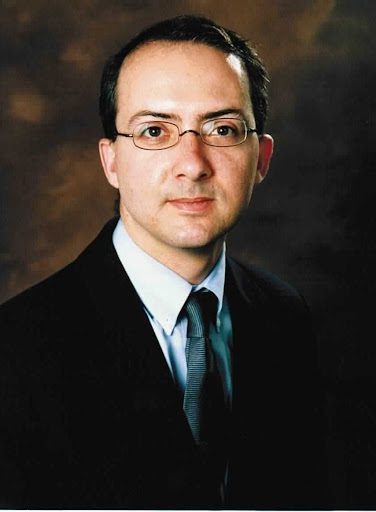
After earning his doctorate, Stockwell became a Fellow at the Whitehead Institute for Biomedical Research in Cambridge, Massachusetts. The institute is dedicated to enhancing human health via basic biomedical research. Brent’s job was to investigate cell death and do synthetic lethal screening, a method for isolating novel mutants.
In 2003, the scientist gathered information on cellular mechanisms to give other scientists a better understanding of cell biology. At the same time, the New Yorker discovered erastin, a compound that selectively kills tumor cells. This compound targets some engineered tumor cells and has cancer-fighting properties. Erastin has been shown to be effective in treating stomach cancer by depleting glutathione, the primary cellular antioxidant. Stomach cancer is one of the most deadly types of cancer (including lung, colon, rectum and breast cancer).
The main discovery
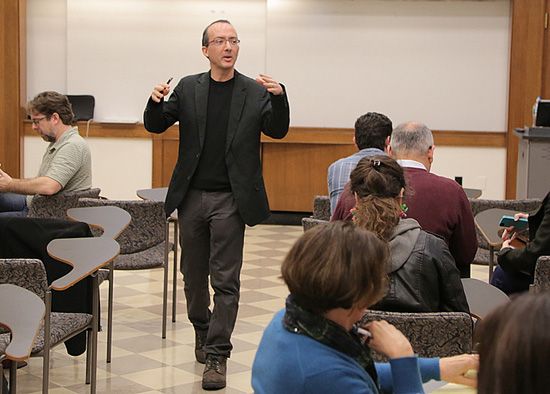
While working as an assistant professor of biological sciences and chemistry at Columbia University, Stockwell discovered two novel compounds capable of killing tumor cells: RSL3 and RSL5. He experimented with cells engineered with a cancer-causing mutation and identical cells that lacked the mutation.
In 2012, with the assistance of Scott Dixon, using his knowledge of erastin, Brent Stockwell discovered the process of ferroptosis. This is a type of programmed cell death that occurs when iron ions oxidize the lipids of the cell. Intracellular iron, which results from the accumulation of lipid peroxidation products, causes cell death. Brent coined the term ferroptosis, explained the underlying mechanisms and developed the first chemical probes to monitor the process.
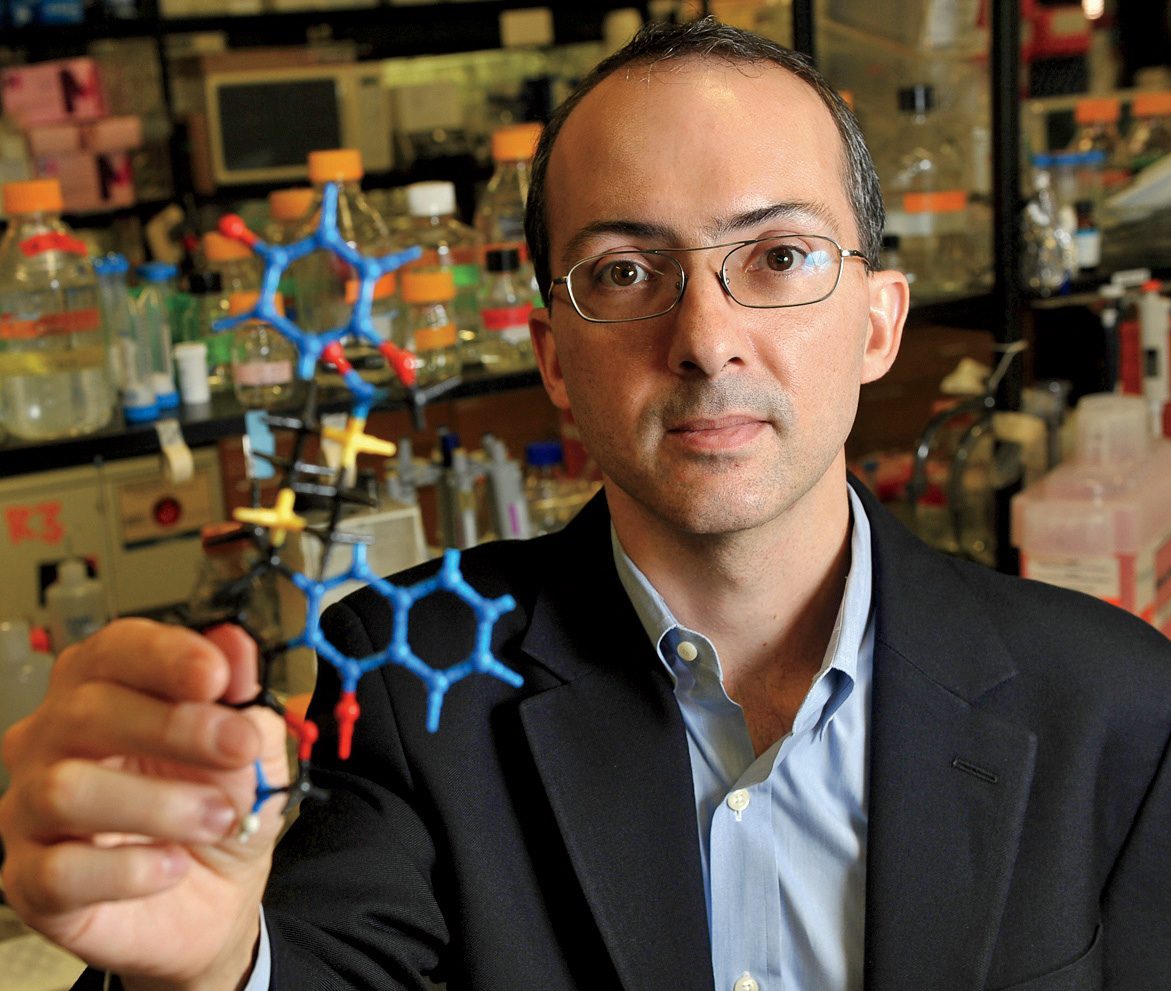
Prior to the introduction of the concept of ferroptosis, there were three major areas of research that together provided fundamental knowledge of what we now name ferroptosis: metabolic mechanisms, overactive oxygen control and iron regulation. Morphologically, ferroptosis is characterized primarily by mitochondrial contraction, increased membrane density and a decrease or disappearance of mitochondrial cristae. This process is different from other methods of cell death.
Ferroptosis can be used to kill tumor cells. In particular, it plays a role in cancers of the breast, ovaries, lungs, kidneys, brain, pancreas, hematopoietic and lymphatic systems. These types of cancer are known to be very sensitive to ferroptosis. At the same time, not all types of cancer respond to this treatment. For instance, one research revealed that ferroptosis in certain cells releases oxidized lipids, which do not promote recovery but rather suppress immunity.
The effects of the discovery
Since 2012, there has been significant progress in investigating the mechanisms that control ferroptosis, which has influenced our understanding of its value in biology and medicine. Numerous researchers have identified specific lipids that are oxidized during ferroptosis and control the process of cell death, key aspects of iron regulation and more.
In 2020, scientists from Washington State University and Stanford University made a major discovery while conducting tests with worms and human cells. They discovered that the natural fatty acid known as DGLA can trigger ferroptosis and eliminate cancer cells. Bacteria containing DGLA were introduced to the worms’ diet, which triggered the ferroptosis process, resulting in further cell death due to the accumulation of iron peroxide and lipids in them.
This acid is present in small amounts in the human body. Additionally, scientists discovered that humans activate the ferroptosis mechanism and inhibit cancer cells more effectively than worms. However, DGLA is practically never detected in the human diet, and its properties are relatively unknown.
Although the researchers have yet to determine exactly how ferroptosis works and how it may be utilized to extract cancer cells, they have proven the effect of DGLA on cancer cells. This presented a potential possibility to fight cancer. Ferroptosis is related to a variety of diseases, including nervous system disorders, ischemia-reperfusion injuries and renal and blood diseases.
A number of enzymes, including GPX4 and ACSL4, have been identified as major ferroptosis regulators. However, the mechanisms underlying it are still being investigated. For example, whether a protein pore is required for ferroptosis, whether the formation of such a pore represents the final stage (point of no return) in ferroptotic cell death and so on. Ferroptosis causes genetic changes in iron homeostasis and lipid peroxidation metabolism, however, the specific regulatory mechanism requires further study.
Thus, scientists have proven that activating or suppressing ferroptosis is relevant for the treatment of a variety of human diseases. The medical industry will need to make significant efforts to encourage the development of drugs based on ferroptosis. According to scientists, a greater knowledge of the molecular processes involved in ferroptosis, as well as the presence of detectable biomarkers, would undoubtedly lead to further efforts in drug development and, eventually, clinical treatment.
Recognition
Brent Stockwell has received numerous awards for his contributions to the study of selective and non-toxic cancer treatment. In 2007, he won the Beckman Young Investigators Award. He also won the BioAccelerate NYC Prize. Additionally, City & State organization named Stockwell one of the top scientists, entrepreneurs and investors.

In addition to discovering ferroptosis, Stockwell created a novel blended learning strategy for teaching biochemistry and carried out randomized controlled experiments to evaluate the efficacy of the teaching methods. He also integrated virtual, augmented and mixed reality into his biochemistry course.