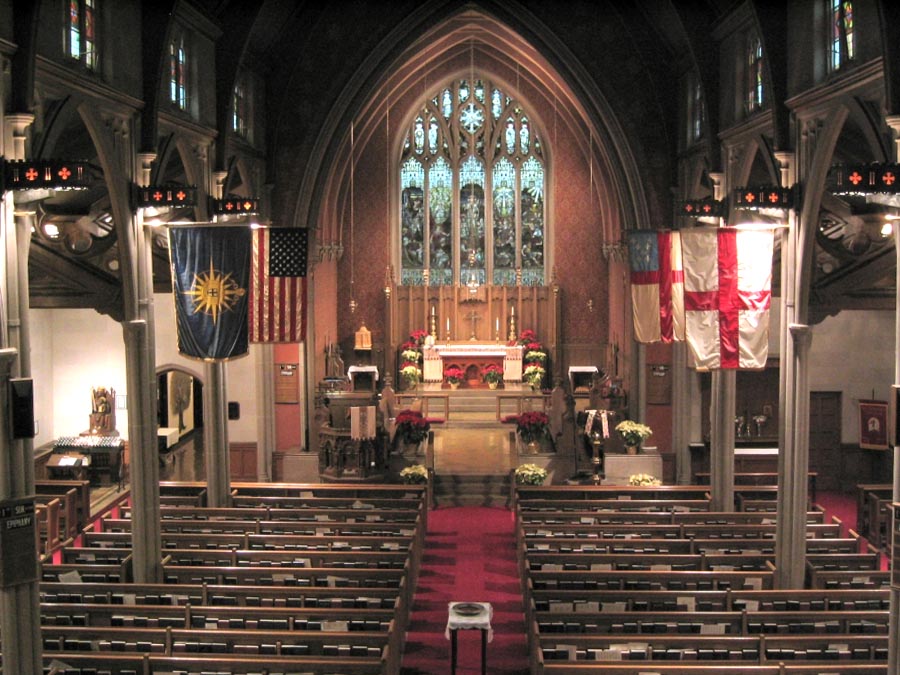

NYC is a magnet for architecture buffs, as the city abounds with both historic iconic buildings and stunning skyscrapers. The local churches with their high ceilings and magnificent stained glass windows, provide a sense of serenity. They often serve not just as a place of worship but also as venues for concerts and other events. Although most shrines are located in Manhattan, Queens also has much to offer. For a selection of the Borough’s most beautiful churches, check out i-queens.
St. Benedict Joseph Labre Church
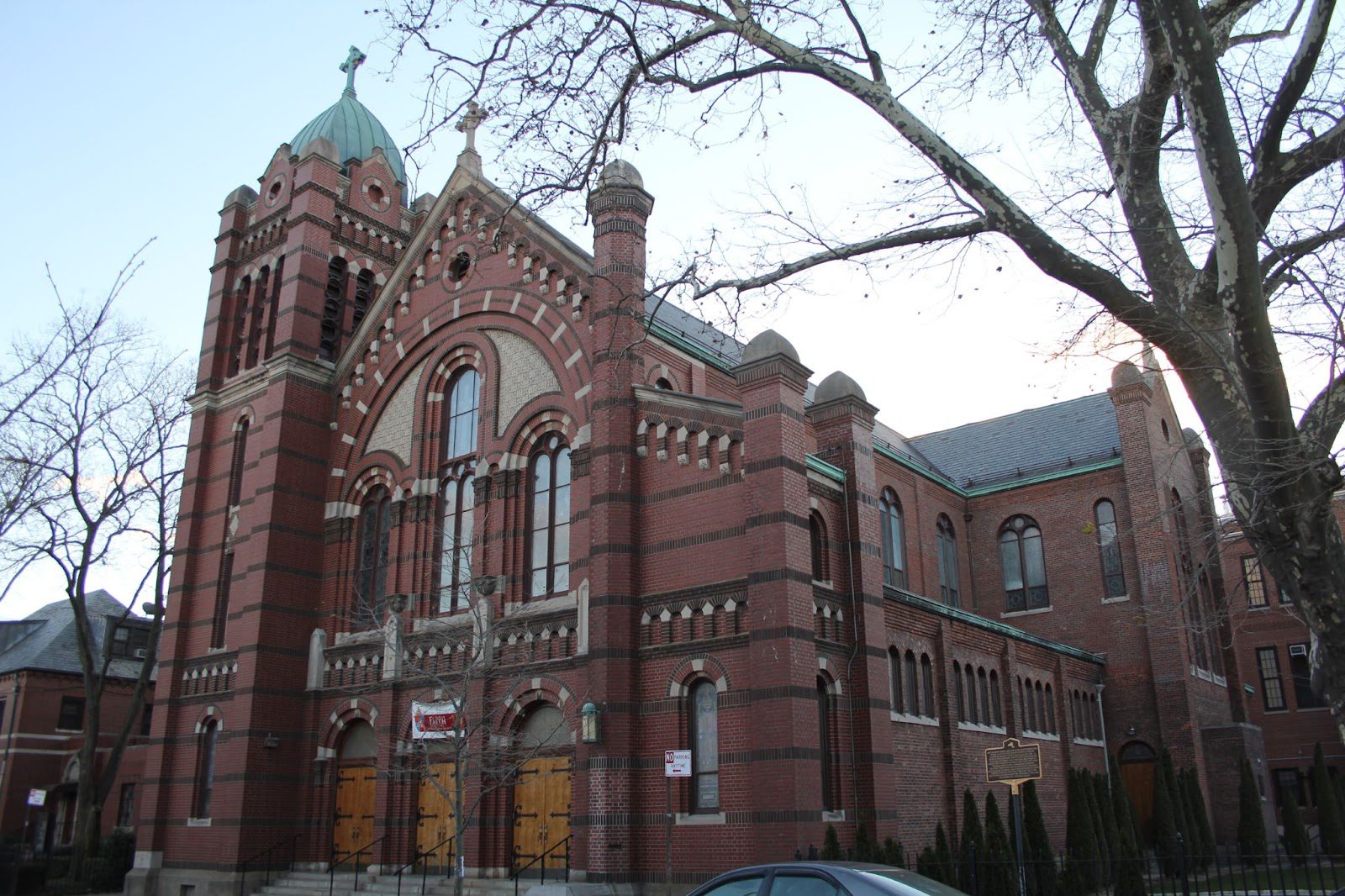
This historic Roman Catholic parish church complex includes a church, clergy house, school and cloister. The brick Romanesque-style shrine was built in 1919. The church’s patron saint is St. Benedict Joseph Labré, a French Franciscan tertiary and Catholic saint.
Because of his poor health and a lack of academic training, Labré could not enter monastic life, so he chose the path of a pilgrim. He traveled to many of Europe’s main shrines, surviving on charity. Benedict wore threadbare beggar’s clothes and shared his food with those in need. Filled with love for God and neighbor, he prayed for 2 hours in a church in Rome, on the last day of his life, After praying, he died peacefully in a neighboring building. Right after his death, the people proclaimed him a saint. Labré is considered the patron saint of the homeless.
In October 1971, an accidental fire occurred in the church’s sacristy. While extinguishing the fire, firefighters inadvertently damaged the stained glass windows on the choir loft, causing water and glass damage to the organ. Subsequently, the destroyed windows were replaced with various panels depicting musical instruments.
First Reformed Church
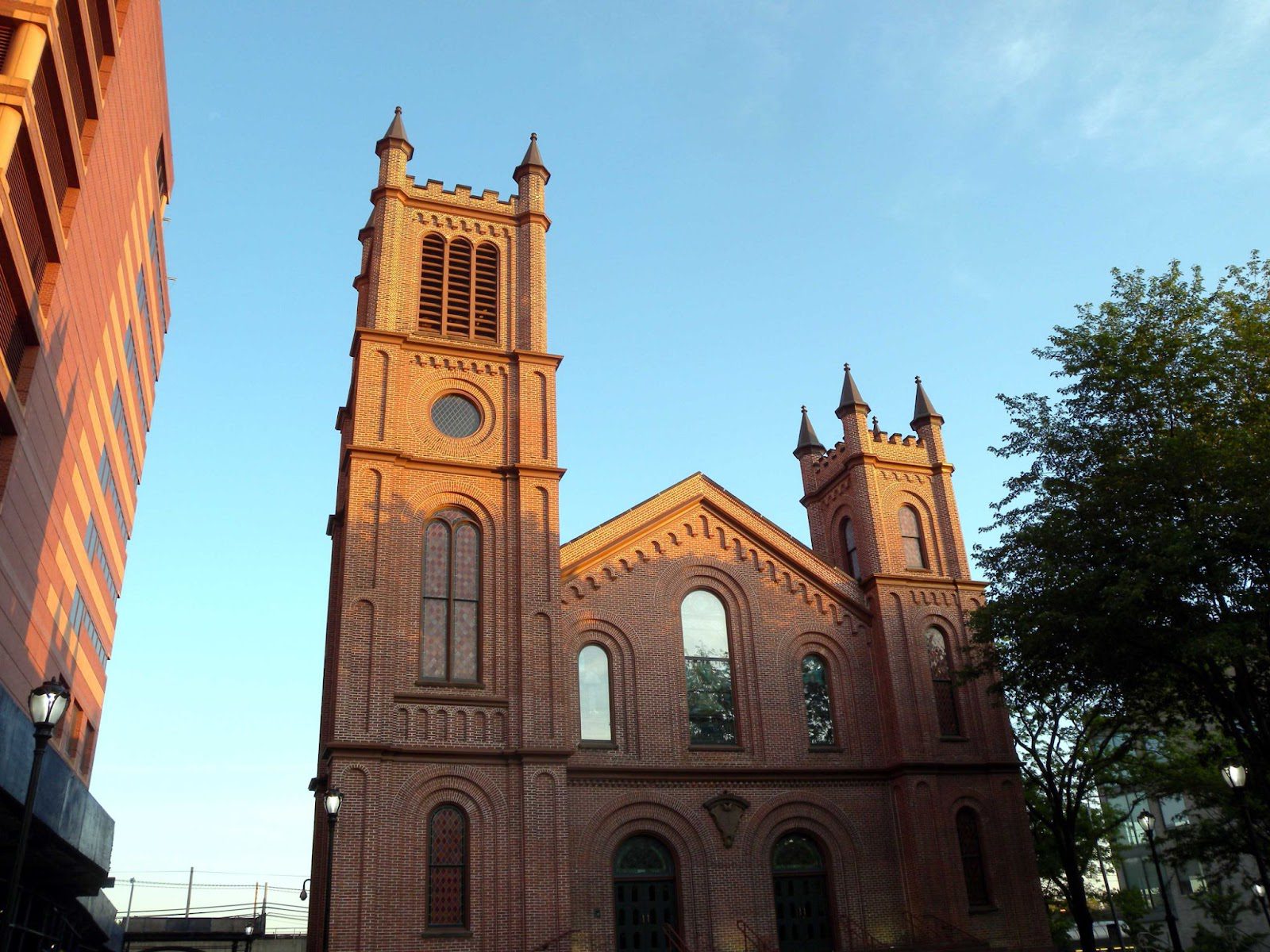
The First Reformed Church was constructed in 1859. The church’s asymmetrical towers, arched openings and cantilevered tables are all examples of the Rundbogenstil architectural style. Its most distinctive features are the arched openings and the minimal amount of trim used. The church was listed on the National Register of Historic Places in 1980 and officially became a NYC Landmark 16 years later. It is considered one of the finest examples of Early Romanesque Revival architecture in NYC.
St. Matthew’s Episcopal Church
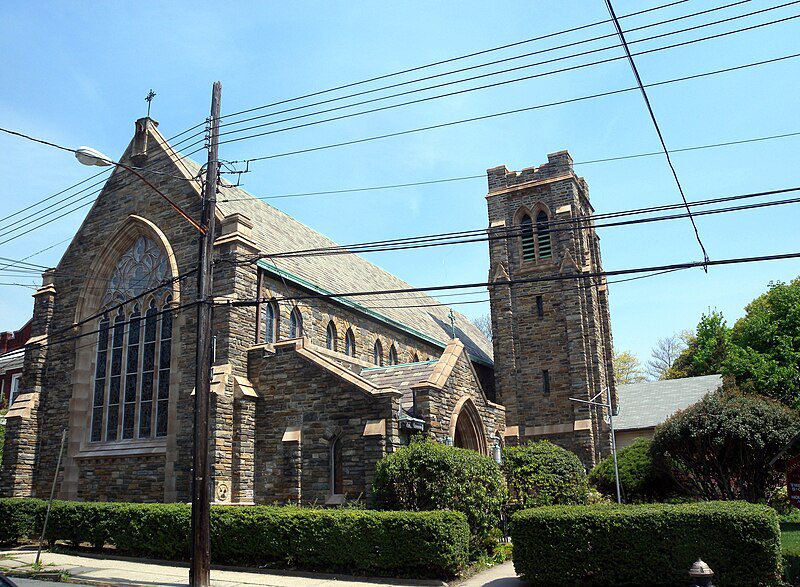
This historic church was constructed in 1927 in the Late Gothic Revival style. Adjacent to the church is the Wyckoff-Snediker Family Cemetery, which contains numerous gravestones dating from the 18th and 19th centuries. Both the church and the cemetery were added to the National Register of Historic Places in 2001.
St. Matthew, one of the 12 apostles of Jesus Christ and the author of the first Synoptic Gospel, is the patron saint of the shrine. There is some discrepancy among legends regarding the location of his mission and whether he died a natural or martyr’s death. St. Matthew is also known as the patron saint of tax collectors and accountants.
St. Adalbert Roman Catholic Church
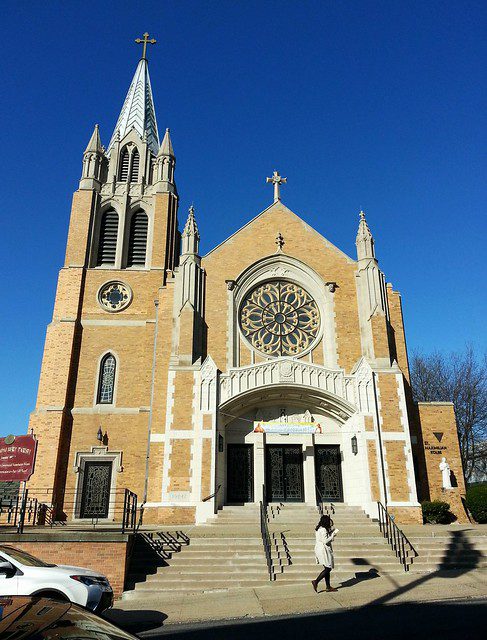
St. Adalbert Roman Catholic Church opened its doors in 1892 to serve immigrants from Poland who had settled in the Elmhurst and Maspeth neighborhoods. The church’s original parishioners were initially served by Polish-speaking priests and later by priests of Polish heritage.
In 1906, the parish was placed under the administration of the Order of Friars Minor Conventual. While some Polish speakers remain among the ministers, the parishioners come from a wide variety of nationalities. The Catholic Academy, founded in 1892, is attached to the church and offers educational services.
The church’s patron saint is Adalbert of Prague, AKA, Saint Vojtěch. According to legend as a child, Vojtěch suffered from a strange illness. His parents made a vow to God that if their son recovered, he would become a priest. Subsequently, the young man did indeed choose this path and became the first bishop of Prague with Czech roots. He was also the first Czech bishop to be canonized by the Pope.
Adalbert of Prague advocated for a monogamous Christian lifestyle, which didn’t go over well with those in positions of authority. He also spoke out against the sale of Christians as slaves to Muslims, a practice that often made money for Jews. The bishop designated one-quarter of the income to help the poor. Because of these views, the bishop has had to overcome various hardships and struggles with pagan beliefs throughout his ministry. He also had tense relations with the local prince due to the bishop’s efforts to establish the Church as a separate entity from princely authority.
St. Joseph Roman Catholic Church
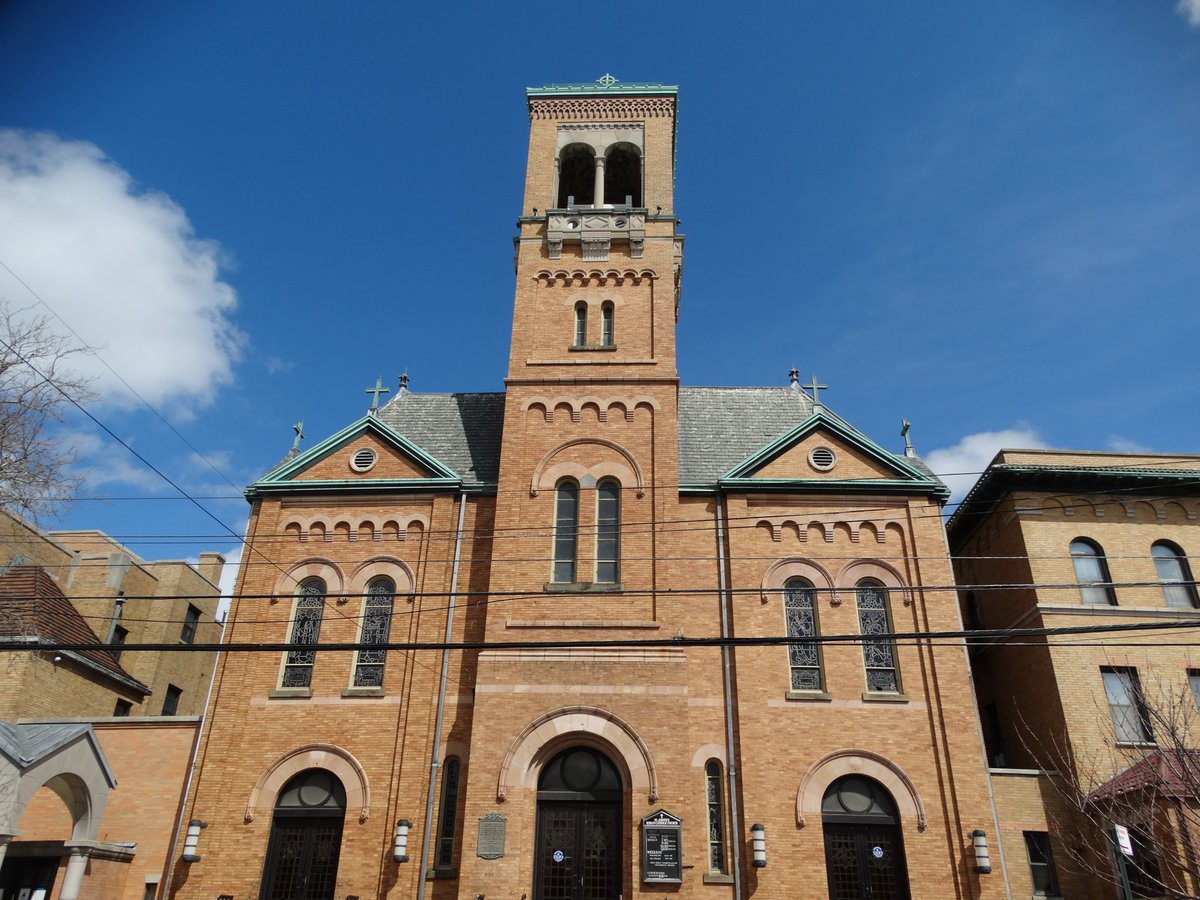
This shrine has been a spiritual home for Catholics since 1904. Among the parishioners are representatives of over 50 countries. The Eucharist holds a central place in the faith of the church’s members. They firmly believe in the transformative power of the Word of God. The church is dedicated to St. Joseph, known in Christianity as the husband of the Virgin Mary and the earthly father of Jesus Christ. He is recognized as the patron saint of the Catholic Church. You will often see him depicted on icons as a carpenter, accompanied by Jesus, with symbols like lilies and doves. St. Joseph is regarded as the patron saint of parents, unborn children, workers, carpenters and artisans. He is also the patron saint of the Americas, Canada, Belgium, Croatia, Indonesia, Korea and Vietnam.
St. Joseph Catholic Academy has been affiliated with the Church since 1917. It serves approximately 500 students (Pre-K through 8th grade) from six parishes in the Astoria and Long Island City neighborhoods. The school’s mission is to educate students of diverse origins and faiths, providing them with a well-rounded foundation for their future lives. Throughout their education, students focus on the messages of the Gospel to serve God and one another. The Academy nurtures knowledgeable, accountable and involved members of the worldwide community.
St. Raphael Catholic Church
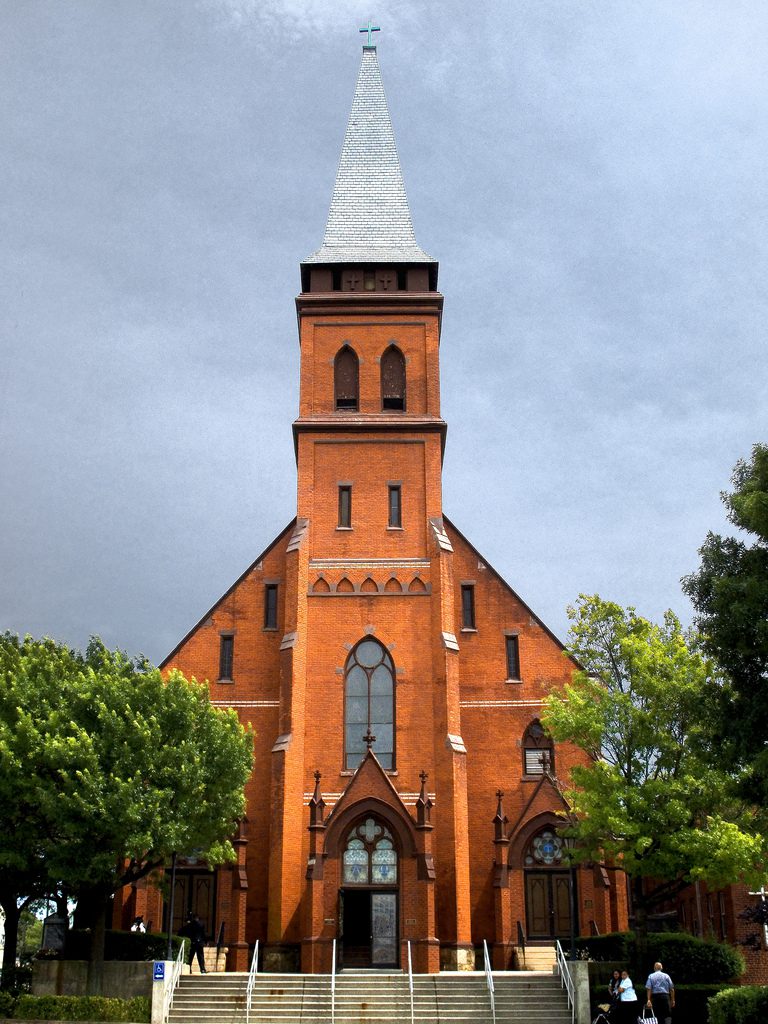
Constructed in 1885 of brick and sandstone, St. Raphael Church is an example of Gothic church architecture. Meanwhile, St. Raphael’s parish was founded in the Long Island City neighborhood in 1865. Back then, the neighborhood was known as Blissville, named after Neziah Bliss, a shipbuilder, manufacturer and inventor.
St. Raphael’s parish is unique in that it consists of equal parts English, Spanish and Korean speakers. A lot of Korean churchgoers actually live far from the neighborhood but still consider St.Raphael’s their spiritual home. There is a white statue of St. Andrew Kim Taegon, the patron saint of Korea, standing outside the church.
St. Teresa’s Roman Catholic Church
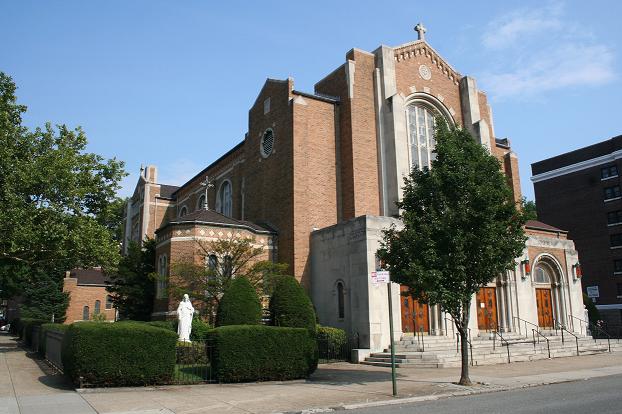
Since 1952, St. Teresa’s Church has been celebrating the word of God. The church is dedicated to Teresa of Avila, a Spanish Carmelite nun, theologian and Catholic saint. At the age of 20, Teresa joined the Carmelite Convent of the Incarnation. Despite her great enthusiasm for monastic matters, Teresa was unable to cope with the psychological strain and fell seriously ill. At one point, the convent thought she was dead and even started digging her grave. However, Teresa recovered and went on to become one of the most educated women of her time. She also established a branch of the Carmelite Order, known as the Discalced Carmelites. She is considered the patroness of Spain and Croatia.
Presentation of the Blessed Virgin Mary Roman Catholic Church
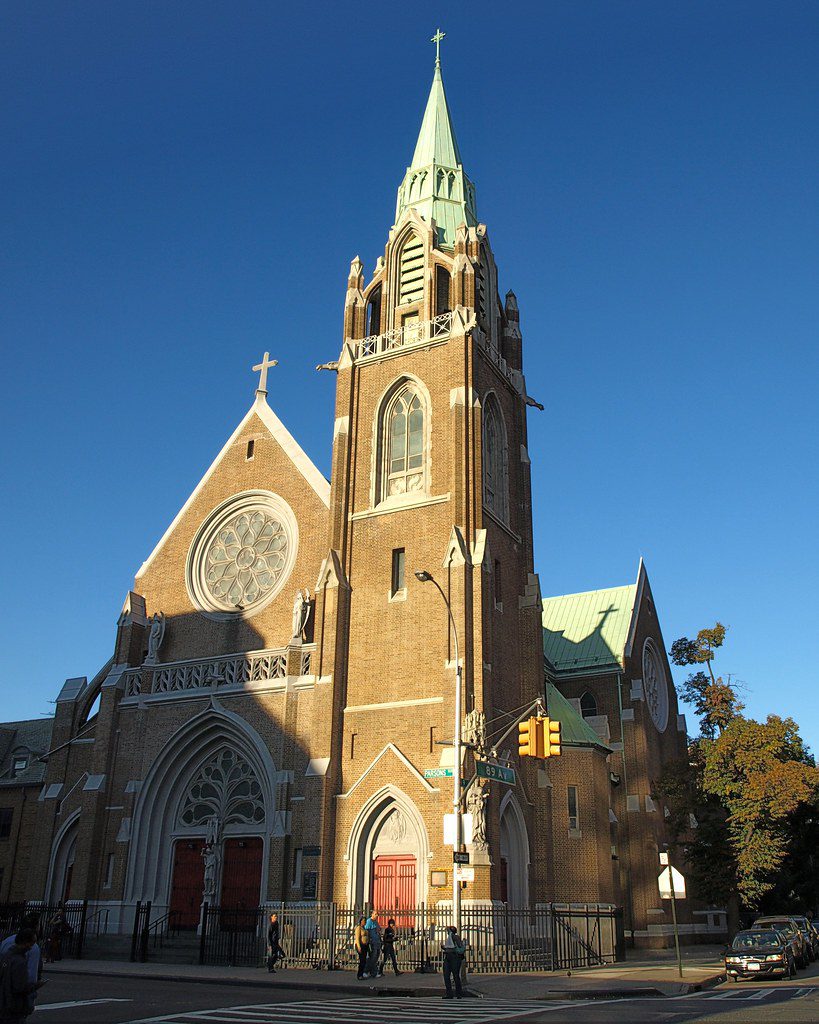
Founded in 1894, this church is dedicated to the service of God and His faithful followers. The Blessed Virgin Mary’s patronage is seen as a source of spiritual protection believed to come from the mother of Jesus. She is revered as the patroness of all mankind.